Table of contents
About chicken tagine with olives and preserved lemons
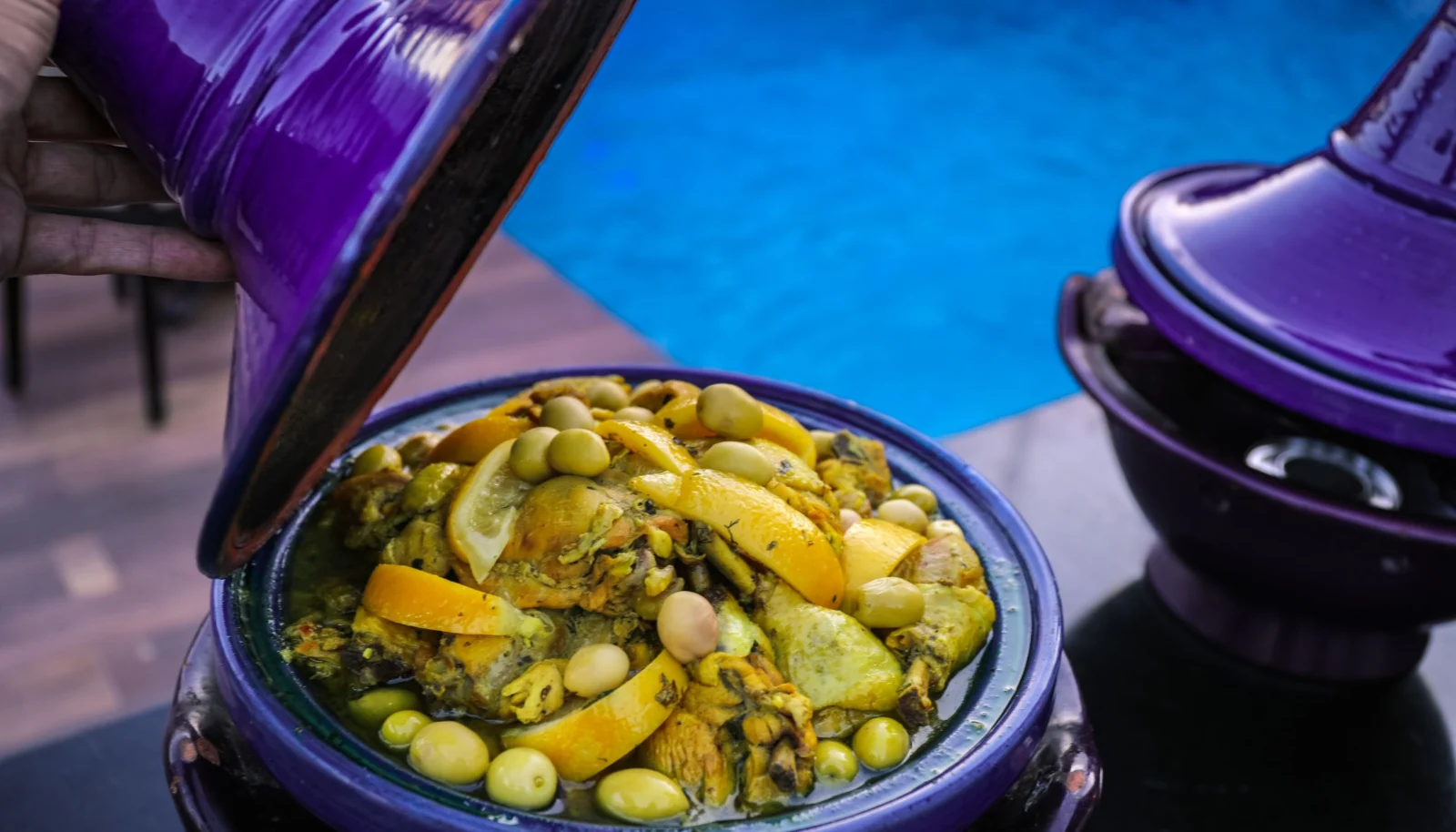
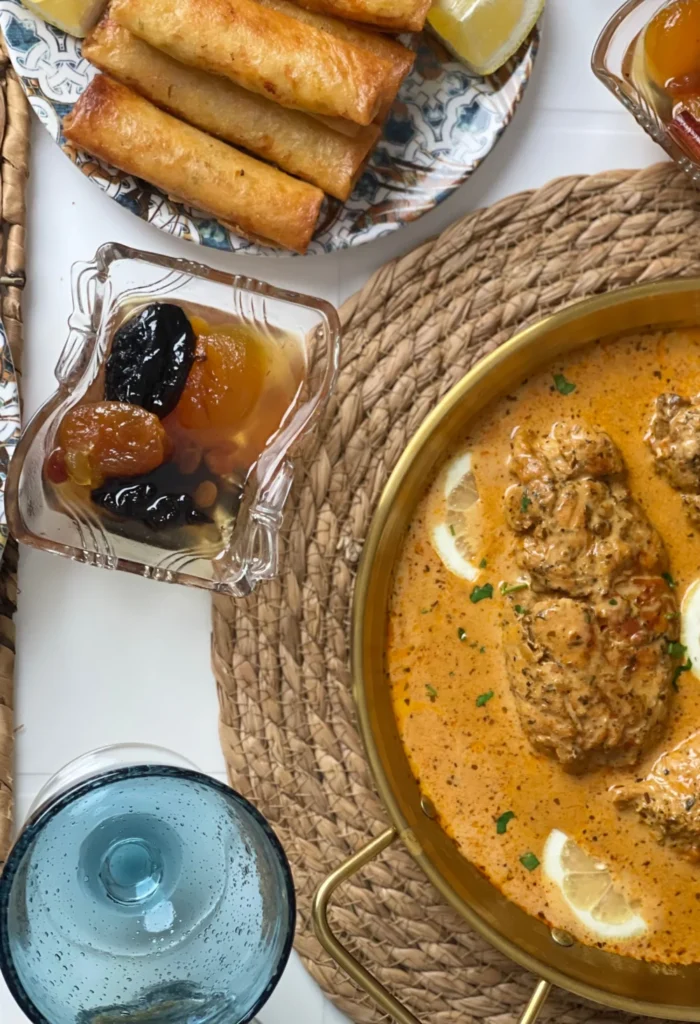
This dish is called djaj mqualli (also spelled mkalli), which is written دجاج مقلي in Arabic. Moroccan cook Nargisse Benkabbou describes it as a classic of Moroccan cuisine, found in family kitchens and restaurants alike, and she identifies the soft, caramelised onion sauce as the heart of the dish (My Moroccan Food). Spices such as turmeric, ginger, and saffron give the sauce its colour and warmth, and the preserved lemon (الحامض المصير in Darija) adds a salty, sharp lift. This chicken tagine with olives and preserved lemons is a classic worth learning early.
This version follows Benkabbou’s quantities and timings, rewritten in our own words, and adds notes from Arabic and French recipes that differ from it.
Ingredients (serves 4 to 6)
- 1.2 kg whole chicken cut into pieces, or chicken legs and thighs
- 4 large onions, about 800 g, chopped
- 2 tablespoons olive oil
- 4 garlic cloves, about 1 tablespoon, finely chopped
- 1 teaspoon ground turmeric
- 1 teaspoon ground ginger
- A generous pinch of saffron
- 1 teaspoon salt, adjusted to taste, and 1/4 teaspoon black pepper
- 1 large bunch of coriander, tied together
- 2 medium preserved lemons
- 150 g olives, red brown such as Kalamata
Method
- Soften the onions. Heat the oil in a large casserole or tagine over medium heat. Add the onions, cover, and cook for about 10 minutes until soft and translucent.
- Brown the chicken. Add the chicken, garlic, turmeric, ginger, saffron, salt, and pepper. Turn the pieces from time to time for 10 to 15 minutes until lightly browned.
- Simmer. Pour in 240 ml of water and lay the coriander bunch on top. Bring to the boil, cover, and cook over medium low heat for about 50 minutes, until the chicken is fully cooked.
- Prepare the lemons. Discard the pulp of the preserved lemons and chop the peel finely.
- Reduce the sauce. Lift out the chicken and the coriander. Cook the sauce over medium heat for about 20 minutes, stirring now and then, until most of the liquid has evaporated. Leave a little sauce, and add a splash of water if it gets too dry.
- Add lemon and olives. Stir in the chopped peel and the olives and cook for about 10 minutes.
- Finish. Return the chicken to the pan and warm it through. Serve hot with bread, rice, or couscous.
Tips from the sources
- If you use a whole chicken with its liver, add the liver after you remove the cooked chicken and mash it into the sauce for extra flavour.
- Benkabbou notes that some cooks add the preserved lemon pulp to the onions at the start, while others avoid it to prevent too much acidity. Using only the peel is the gentler choice.
- The cooking times were set for standard pans and casseroles, so adjust them for a clay tagine.
- Some restaurants top the dish with French fries, though the author prefers it with bread, rice, or couscous.
How other recipes differ
| Source | What changes |
|---|---|
| Al Ain, Arabic | Uses potatoes, black and green olives, sliced preserved lemon, and 1/4 teaspoon saffron, finished in the oven |
| Mawdoo3, Arabic | Soaks the chicken in vinegar and lemon water, uses saffron, and serves the preserved lemon and olives as a garnish. It also lists food colouring, which we leave out |
| Edarabia, Arabic | Three olive tagines, none of which uses preserved lemon. Two use fresh lemon, so check the lemon before you call a recipe Moroccan |
| Bladi, French | Marinates 2 kg of drumsticks overnight with turmeric, paprika, and 4 saffron threads, then uses 6 preserved lemons and purple olives |
The sources disagree on the number of preserved lemons, the olives, and the saffron. Start with the quantities above, taste the sauce at the end, and add more peel if you want more sharpness.
Frequently asked questions
What is mqualli?
It is the name of a style of Moroccan dish in which meat is cooked in a sauce of onions and spices, and this is one of its best known forms.
Do I need a tagine pot?
No. A heavy casserole works, and the times above were tested in a standard casserole.
Can I use fresh lemon instead of preserved lemon?
You can, but the flavour will be different, because preserved lemon is salty and mellow. Many Arabic recipes for chicken and olives use fresh lemon, which makes a lighter dish.
Which olives should I use?
Benkabbou suggests red brown olives such as Kalamata, while other recipes use green or black olives. Choose olives you enjoy, and rinse them if they are very salty.
Sources
- My Moroccan Food (mymoroccanfood.com)
- Al Ain, Arabic (al-ain.com)
- Mawdoo3, Arabic (mawdoo3.com)
- Edarabia, Arabic (edarabia.com)
- Bladi, French (bladi.net)