Table of contents
About the dish
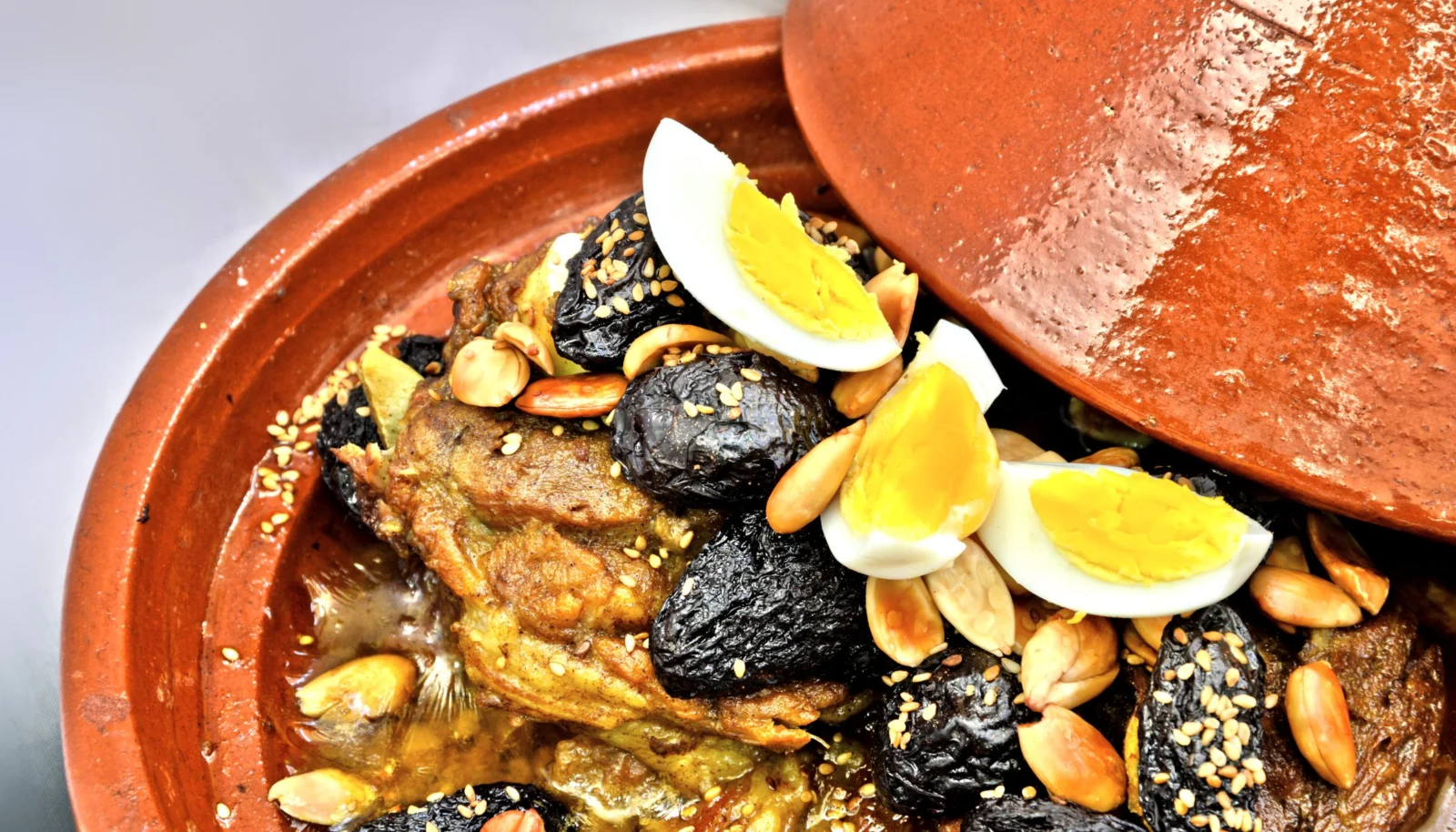
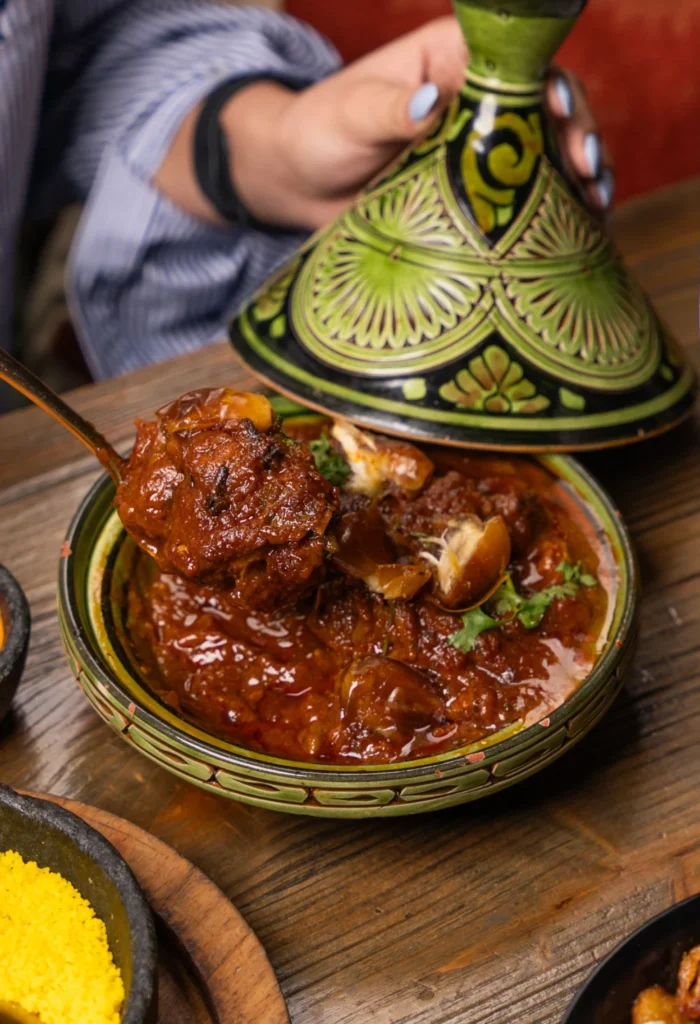
A tagine of meat with prunes, called طاجن اللحم بالبرقوق in Arabic, is one of the best known sweet and savoury dishes of Morocco. An Arabic recipe published by Arabi Post describes the dish as part of Moroccan family and festive cooking, handed down through generations (Arabi Post, 2024). A travel food blog places it in the riad kitchens of Marrakech, and notes that no two cooks agree exactly on what goes into a tagine (Grantourismo). SBS Food files a related lamb dish with apricots and prunes, mrouzia, under Eid recipes (SBS Food). We did not find a scholarly source for the dish’s origin, so we avoid giving a history beyond this. This lamb tagine recipe follows the family style, with prunes, honey and toasted almonds.
Saffron is part of the flavour in several versions, which makes this recipe a good companion to our Taliouine guide.
Ingredients (serves 4)
This version follows the structure and quantities of the Arabic recipe, which uses veal, and swaps in lamb as the other sources do.
For the tagine
- 750 g lamb shoulder or neck on the bone, cut into pieces
- 1 onion, chopped, and 1 garlic clove, minced
- 2 tablespoons olive oil
- 1/4 teaspoon saffron threads, crushed
- 1 teaspoon each of black pepper, fresh grated ginger, cinnamon, salt, and turmeric
- A small bunch of parsley and coriander, tied together
- 500 ml water
For the prunes
- 300 g dried prunes
- 3 tablespoons honey
- 1 tablespoon ground cinnamon
- Toasted almonds and sesame seeds, to serve
Method
- Brown the meat. Heat the oil in a casserole or tagine and brown the meat on both sides.
- Soften the onions. Add the onion, lower the heat to medium, cover, and cook for about 10 minutes until soft and see through.
- Season and simmer. Add the garlic, saffron, spices, salt, pepper, herbs, and the water. Simmer gently for about 2 hours, until the meat comes easily away from the bone. Take out half a cup (125 ml) of the broth after the first hour and keep it for the prunes.
- Cook the prunes. Boil the prunes for 5 minutes and drain them. Warm the reserved broth with the honey and cinnamon over low heat for about 5 minutes, until it thickens, then add the prunes and turn them in the sauce.
- Serve. Place the meat and onion sauce on a dish and top with the glazed prunes, toasted almonds, and toasted sesame seeds.
How other recipes differ
| Source | What changes |
|---|---|
| Arabi Post, Arabic (2024) | The base for this recipe: veal, 1/4 teaspoon saffron, 2 hours of simmering, and a honey and cinnamon prune glaze |
| Mawdoo3, Arabic | No saffron. It uses cumin, nutmeg, tomato paste, carrots, date syrup or dark honey, and toasted almonds, and serves 4 |
| Grantourismo | Lamb with ras el hanout, cumin, ginger, saffron, prunes, almonds, and sesame seeds, cooked down to a syrupy sauce over more than 2 hours |
| SBS Food | The mrouzia style, with ras el hanout, saffron, raisins, apricots, prunes, honey, and sugar |
The saffron quantity varies a great deal, from 1/4 teaspoon of threads to a whole teaspoon, so begin with the smaller amount. If you do not like a very sweet stew, reduce the honey. The Arabic sources also differ on the meat, which can be lamb, veal, or beef, so choose what you can find and adjust the cooking time until it is tender.
Lamb tagine recipe tips
- Keep the sauce thick. One source says a syrupy sauce is what you want.
- Do not stir the prunes too much. A glaze keeps them whole and shiny.
- Toast the almonds and sesame seeds just before serving for the best crunch.
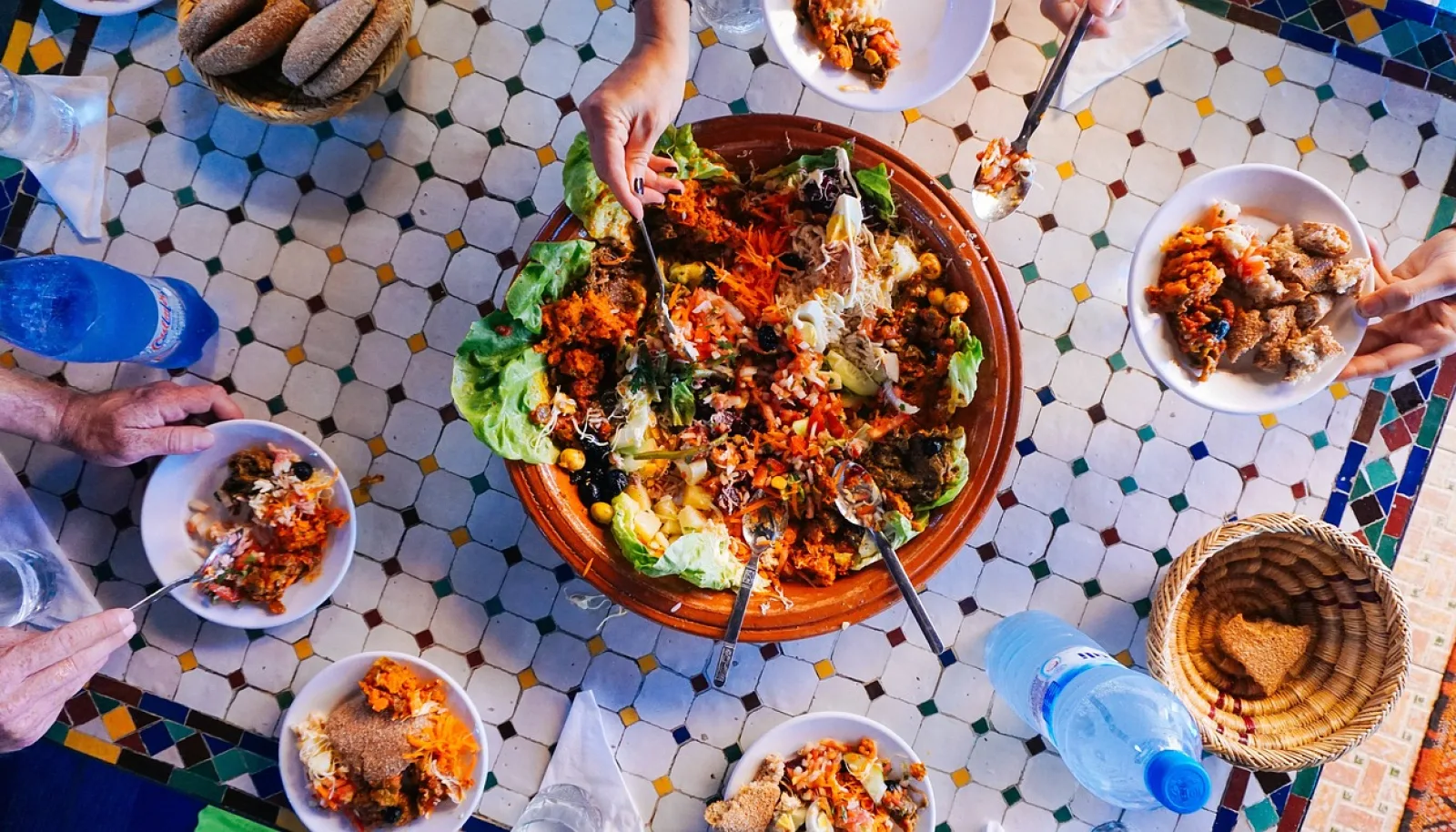
- Serve it communally. The Grantourismo recipe suggests a central tagine with couscous served separately, as is common at the table.
Frequently asked questions
What is the difference between this tagine and mrouzia?
Both pair lamb with dried fruit and honey. SBS describes mrouzia as including ras el hanout, saffron, raisins, apricots, and prunes, and it is associated with Eid.
Do I need saffron?
One Arabic recipe leaves it out, but others include it, so it is optional. A little goes a long way.
Can I use another meat?
Yes. The Arabic recipe uses veal, and beef or lamb are common substitutes.
Is this dish served at celebrations?
The sources link it to family gatherings and, in the mrouzia version, to Eid.
Is lham lahlou the same dish?
Lham lahlou is a sweet meat and prune stew from Algeria in the sources we saw, so treat it as a related dish and not as a Moroccan name.
Sources
- Arabi Post, 2024 (arabicpost.net)
- Grantourismo (grantourismotravels.com)
- SBS Food (sbs.com.au)
- Mawdoo3, Arabic (mawdoo3.com)