Short answer
For saffron, look to the area around Taliouine and Taroudant, or to a shop or cooperative that names its producer and harvest year. For argan oil, visit a women’s cooperative in the Souss region or near Essaouira, or buy a sealed, clearly labelled bottle from a seller who can tell you who made it. In big city souks, compare several sellers and ask questions before you pay.
Table of contents
- Start with the product, not the shop
- Where to buy saffron
- Where to buy argan oil
- Questions to ask any seller
- Common tourist traps
- Bargaining without stress
- How to pack and carry your purchases
- Buying online from Moroccan producers
- A simple plan for a first visit
- Useful phrases for buying
- Three sample plans
- A checklist before you go
- What to record for later
- Frequently asked questions
- Conclusion
Many visitors leave Morocco with a bag of saffron and a bottle of argan oil, and many regret one of the two purchases. Some pay tourist prices for a poor product. Others carry home something that is not what the label claimed. This guide helps you avoid both.
I do not list prices, because they change with the season, the grade and the seller. Wherever a practical detail appears, check that it is still true on the date shown at the top of the page.
Start with the product, not the shop
Before you choose a place, know what you want. Two guides save money here: the guide to telling real saffron from fake and the guide to culinary and cosmetic argan oil. Then use the sections below to pick a place.
Where to buy saffron
| Place | What you may find | What to do |
|---|---|---|
| Taliouine and nearby villages | Saffron close to where it grows, sometimes from cooperatives | Ask for the harvest year and producer, and visit in the harvest season if you can |
| Taroudant | A local market with spices and saffron | Compare stalls and smell before you buy |
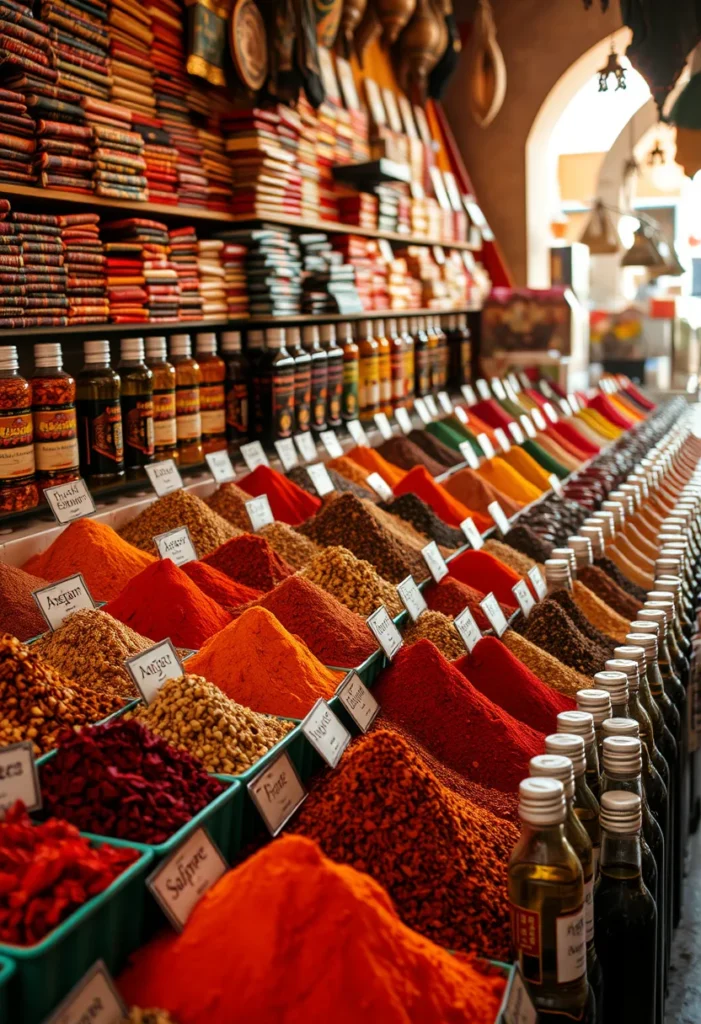
| Marrakech souks | A wide choice of spices, including saffron | Expect very different quality, and use the checks in the saffron guide |
| Essaouira and Agadir | Shops and cooperatives with sealed packs | Look for labels with origin, date and batch |
| Airports and hotels | Convenient, packed products | Prices and choice may be less favourable, so check the label |
Taliouine
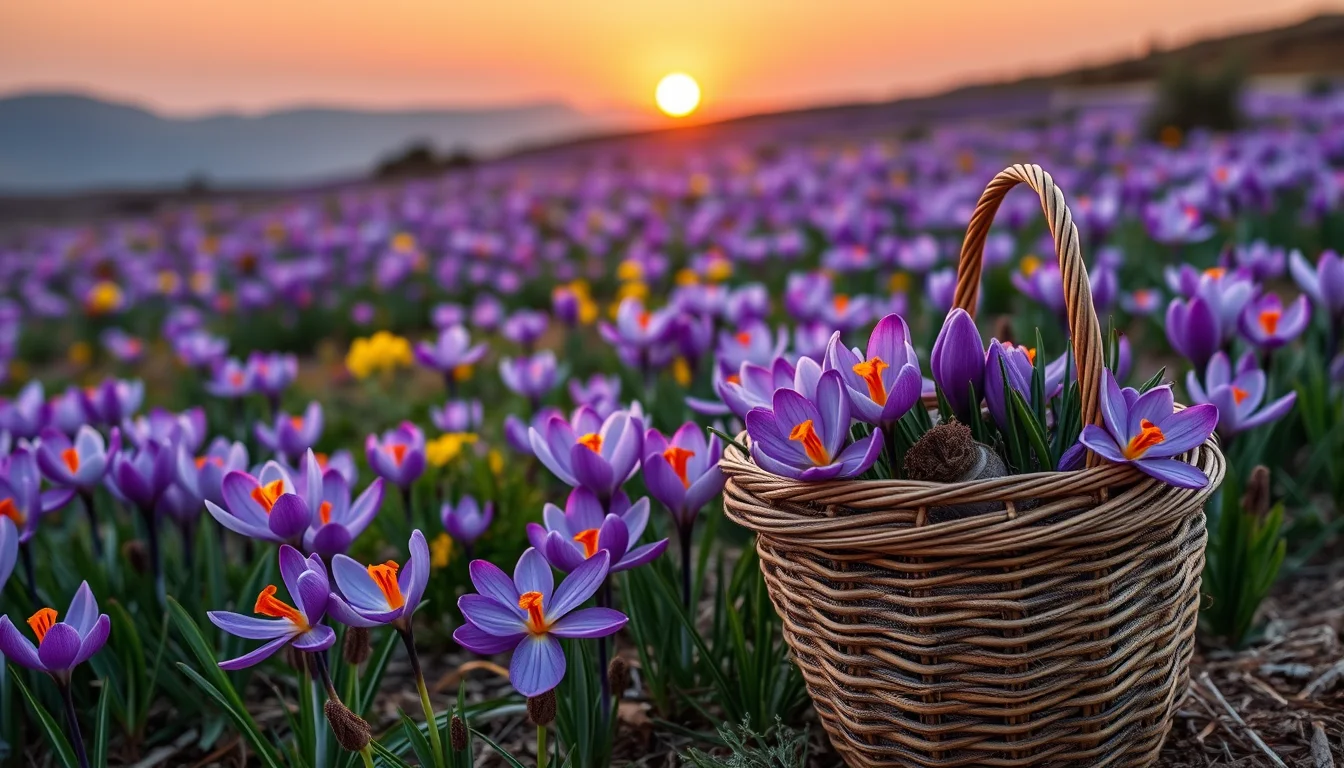
This small town in the south is the centre of Moroccan saffron. Farmers grow the plant in the surrounding valleys and pick the flowers in autumn. A visit lets you meet producers and see how the threads are picked and dried. The guide to Taliouine describes what to expect.
Marrakech
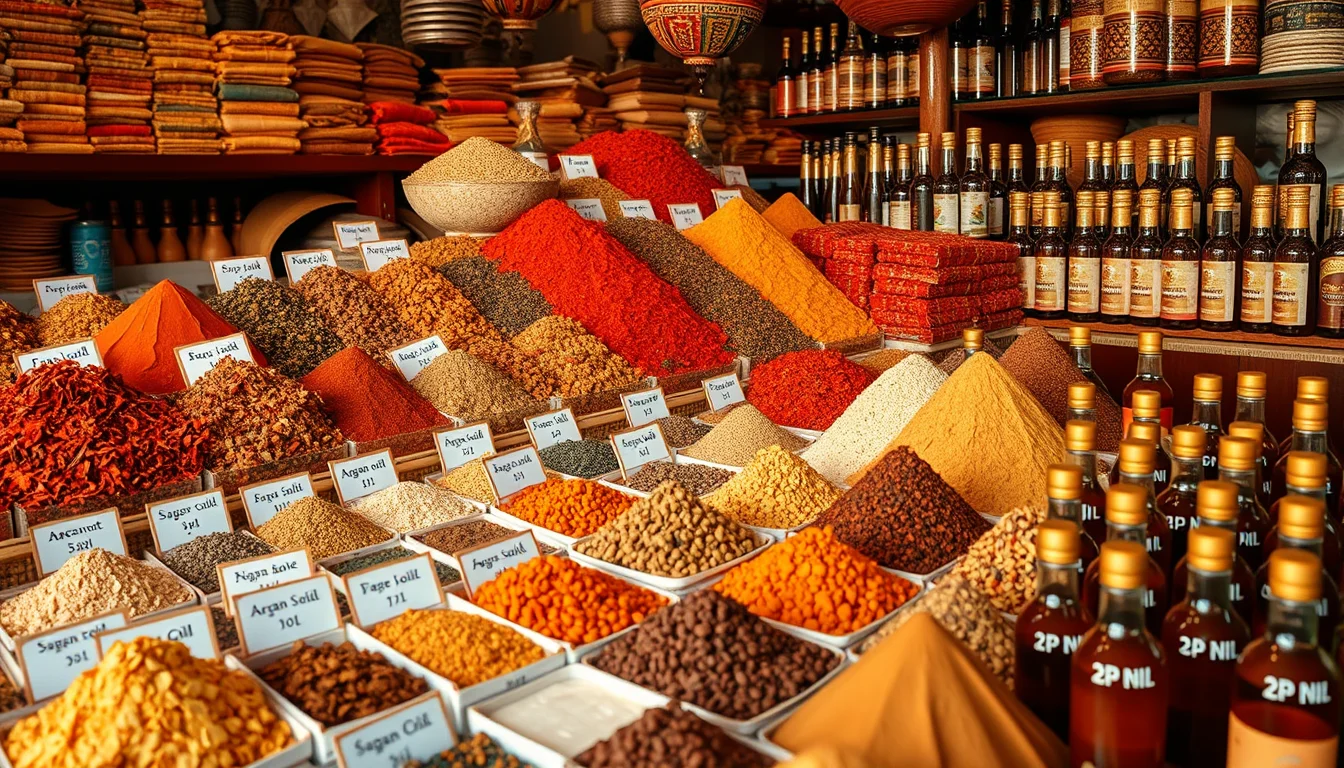
The old city has spice stalls in and around its main squares. You will find good sellers there and you will find sellers who see tourists as a quick sale. Take your time and buy a small amount first.
Cooperatives and specialist shops
A cooperative, or a shop that buys straight from growers, can usually tell you where the saffron grew and when. That openness is worth more than a low price.
Where to buy argan oil
Women’s cooperatives
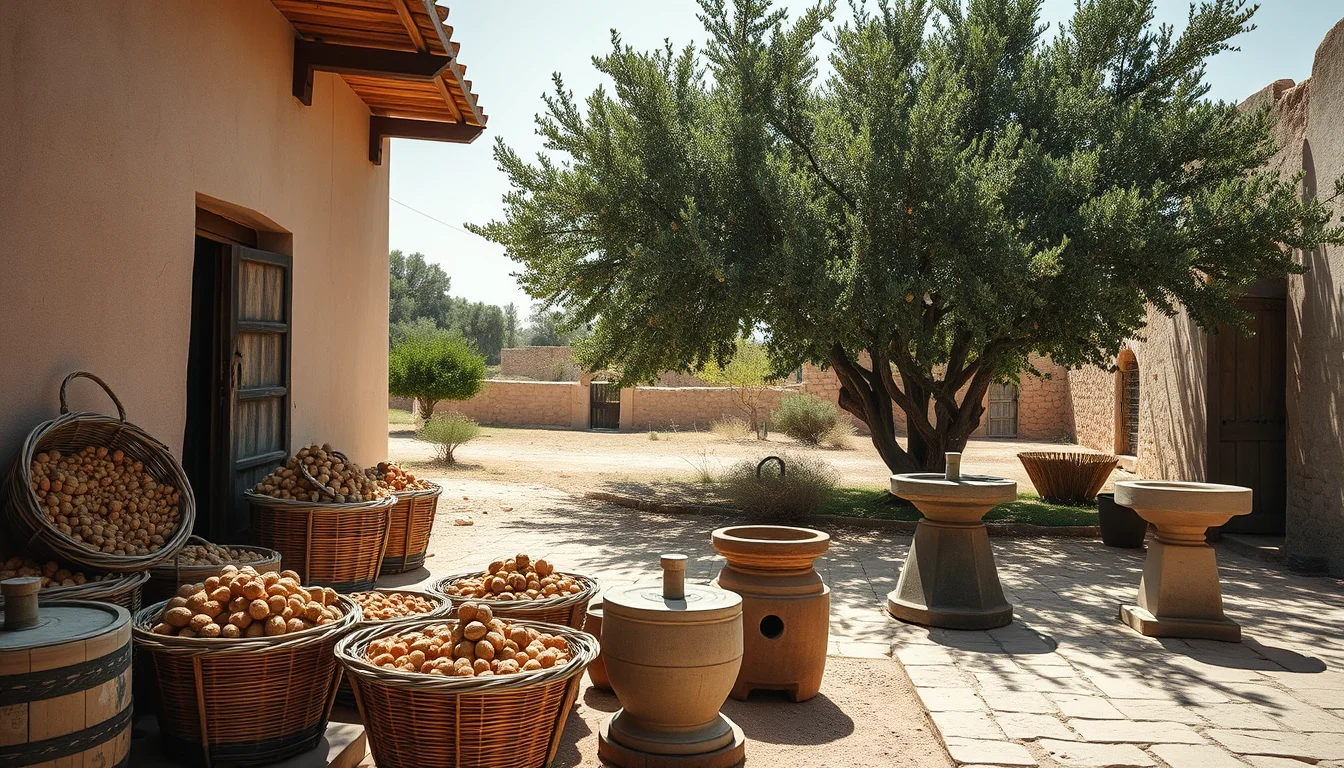
The argan tree grows in the southwest, and cooperatives work between Essaouira and Agadir and further inland. A visit lets you watch the nut cracking and the pressing, ask questions and smell the oil before you buy. The cooperative guide explains how to behave and what to ask.
Roadside stops
Tour coaches often stop at large roadside shops with a short demonstration. Some are honest and some are not. If the pressure to buy is strong, or prices seem to follow no logic, leave.
City shops and souks
In Marrakech, Essaouira and Agadir many shops sell oils. Ask whether the oil is culinary or cosmetic, who made it and when it was pressed.
Pharmacies and supermarkets
Prices are usually fixed and labels are more complete. This is a good option if you dislike bargaining, although the choice is smaller.
Questions to ask any seller
- Is this culinary or cosmetic, and how do I use it?
- Which cooperative or producer made it, and in which town?
- When was it harvested or pressed?
- May I smell it, and may I see a sealed bottle or pack?
- Do you have a batch number, or a laboratory report for the saffron?
A good seller answers openly and does not hurry you. If the answers change from one question to the next, take that as a warning.
Common tourist traps
- A friendly guide who leads you to a particular shop. He may receive a commission, which can raise your price. Choose your own shop, or agree the price before you go in.
- “Special price today only.” Honest sellers do not need to rush you.
- Very cheap saffron in large quantities. Real saffron is costly to produce.
- Unlabelled bottles filled in front of you, which you cannot verify.
- Health promises. If a seller says an oil cures a disease, do not buy.
Bargaining without stress
In souks, prices are often negotiable, and a friendly conversation helps. Decide in advance what a fair amount is for you, and compare two or three sellers before you buy. In cooperatives and pharmacies, prices are usually fixed, and it is polite to accept them. Smile, be honest, and walk away without embarrassment if the price is too high.
How to pack and carry your purchases
Saffron is small and light and travels easily. Keep it sealed in its packaging, away from heat and light. Argan oil needs more care, because bottles can leak.
- Tighten the cap and wrap it in tape or plastic.
- Put each bottle in a sealed plastic bag, and wrap it in clothes in the middle of your suitcase.
- Check the airline’s rules before you choose between hand luggage and hold luggage, since liquids in hand luggage are limited.
- Check customs rules in your home country for spices and oils.
- Keep your receipts.
The guide to bringing gifts home has more packing advice.
Buying online from Moroccan producers
Some cooperatives and small businesses ship abroad. If you buy online, look for a postal address, a real phone number or email, a description of the product with its origin and honest shipping terms. Read reviews with care and start with a small order. I will add trusted options once I have checked them myself.
A simple plan for a first visit
- Read the two buying guides before you travel.
- Buy a small amount from one or two sellers and compare.
- Visit one cooperative and ask how the oil is made.
- If you have time, go to Taliouine in harvest season.
- Keep your purchases sealed until you are home and store them well.
Useful phrases for buying
A few words in French or Darija help a lot in a souk, and sellers usually respond warmly. [Please check the Darija spellings and add Arabic script. You know them better than any guide.]
| English | French | Darija (latin letters) |
|---|---|---|
| How much is this? | C’est combien ? | Bshhal hada? |
| That is too expensive | C’est trop cher | Ghali bzzaf |
| Can you lower the price? | Vous pouvez baisser le prix ? | Wach momkin tnqes shwiya? |
| I would like a small amount | Je voudrais une petite quantité | Bghit shwiya |
| Where does it come from? | D’où ça vient ? | Mn ayn jay hada? |
| Thank you | Merci | Shukran |
Three sample plans
These plans are outlines. Check distances, road conditions and opening times before you go.
Two days: Marrakech and a cooperative
Day one: explore the spice stalls in Marrakech, buy a small amount of saffron and compare two sellers. Day two: travel toward the coast and visit an argan cooperative, then buy a labelled bottle of oil.
Four days: Marrakech, Essaouira and the cooperatives
Spend two days in Marrakech, then travel to Essaouira. Visit a cooperative from there on a morning, and use the afternoon to walk the old town and try amlou at breakfast the next day.
Seven days: south and coast loop
Begin in Marrakech, continue to Ouarzazate and Taliouine in harvest season, then to Taroudant and Agadir, and finish in Essaouira. This route touches the main growing areas of both products. Allow extra time for mountain roads.
A checklist before you go
- Read the two buying guides.
- Bring small notes and some coins.
- Pack a small notebook to write down where and when you bought each item.
- Pack zip bags and tape for liquids.
- Leave space in your luggage.
- Check customs and airline rules for your trip home.
What to record for later
Write down the name of each seller, the town, the date, the price and the batch number if there is one. If you ever want to write about the product or complain about it, this note becomes valuable. It also gives you material for honest, first hand articles on your site.
Frequently asked questions
Is it cheaper to buy in Morocco?
It can be, especially from a producer, but the price depends on the seller and the season. Do not assume a souk price is a good price.
How much saffron should I buy?
A small amount goes a long way. Buy only what you will use within a year.
Should I buy argan oil from a roadside shop?
Only if you can check the label and the producer, and feel no pressure.
Can I trust a cooperative label?
It is a good sign, but not proof. Look for a batch number, a date and clear answers.
Conclusion
The best places to buy saffron and argan oil are the ones that can tell you where the product came from. Take your time, ask questions, compare, and buy small amounts first. One honest cooperative visit teaches more than any list of prices.