Short answer
Taliouine, in southern Morocco, is the centre of saffron production. The flowers are picked in autumn, usually early in the morning, and families remove the threads by hand. Go in the harvest period, check the dates with a local source first, and bring warm clothes for cool mornings.
Table of contents
- Where it is
- When to go
- How the harvest works
- Getting there
- Where to stay
- What to see and do
- How to be a good guest
- Buying saffron in Taliouine
- A sample two day plan
- What to pack
- Packing list for an autumn trip
- A sample three day plan
- Food to try
- Weather and timing
- Respecting the harvest
- Local guides and fair pay
- Frequently asked questions
- Sources
- What we verified
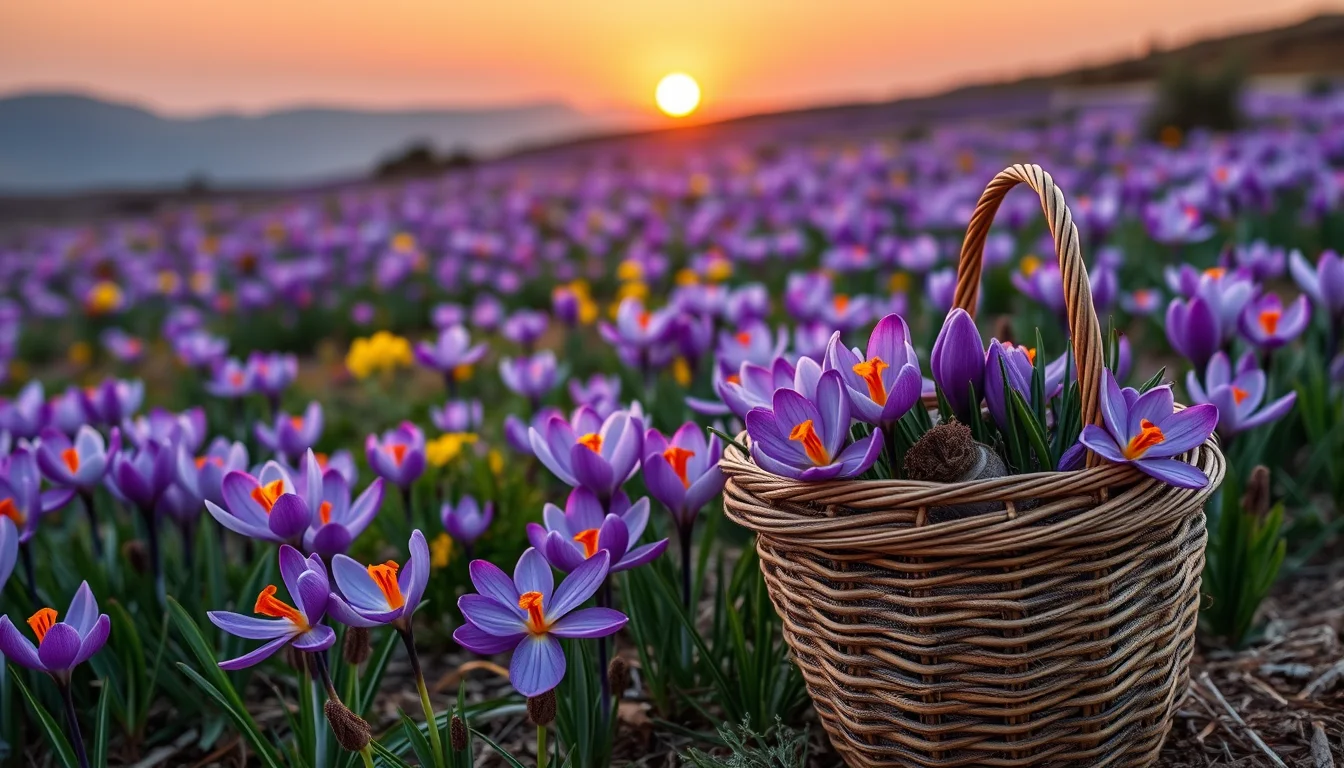
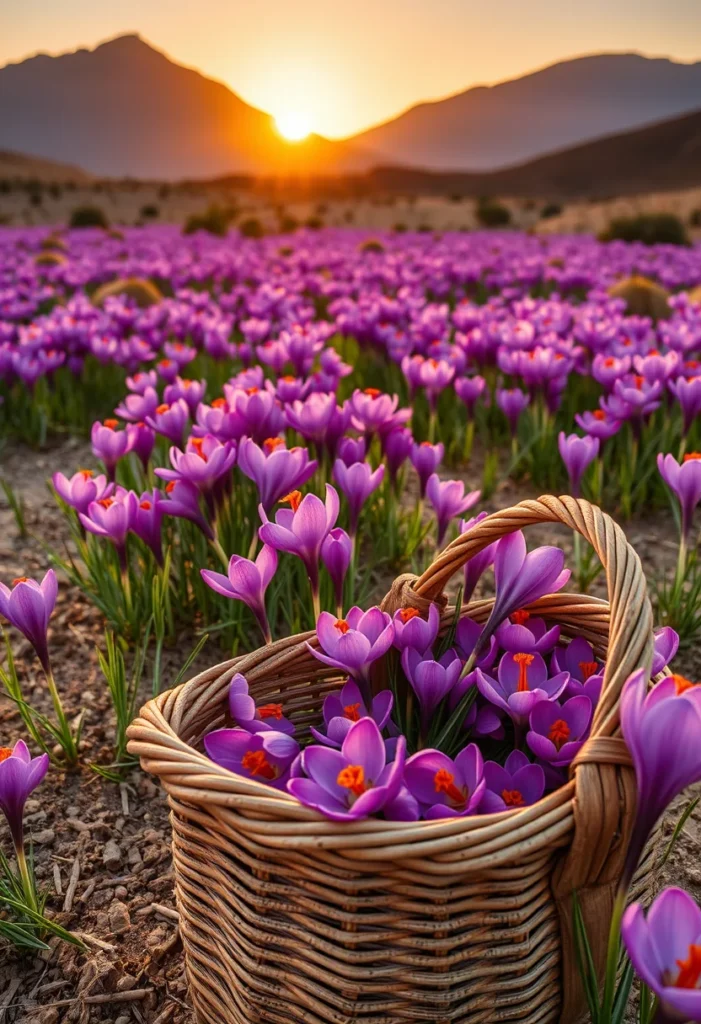
If a single place explains Moroccan saffron, it is Taliouine. A small town in the south between the High Atlas and the Anti Atlas, it sits in a valley where farmers have grown the crocus for a long time. In autumn the fields turn violet for a few weeks, and families work quickly, because the flowers open and wilt fast.
Where it is
Taliouine lies in the south of Morocco, in the region of the Souss and the Anti Atlas, on the road that links Ouarzazate and Taroudant. It sits in the Sirwa mountains, between Ouarzazate and Agadir (Aramco World). You can reach it by car from Marrakech, Ouarzazate or Agadir, or by tour.
When to go
Saffron flowers bloom for a short period in autumn, generally from late October into November. A field flowers for roughly ten days to two weeks, and the whole harvest has traditionally lasted about a month (Aramco World). Hespress reported in April 2026 that the window has shrunk to about 20 days because of rising temperatures and irregular rain (Hespress English). If you want to see the harvest, plan around those weeks and stay flexible. Check whether a saffron festival takes place, and when. Taliouine holds an international saffron festival every November (Wikipedia). Recent editions ran from 2 to 4 November in 2017 (Morocco World News) and from 20 to 23 November in 2025, when the 16th edition had 120 vendors of local saffron products (TelQuel). The dates move each year, so check them before you book.
How the harvest works
The flowers are picked by hand, often at dawn, before the sun opens them fully. Families bring them home and remove the three red stigmas from each flower by hand, sometimes on the same day. The stigmas are then dried. Pickers start around 4 AM and are usually done by 9 AM, because the flowers wilt quickly (Culture Trip). The work is fine and slow, and it explains why saffron costs so much.
Getting there
By car, allow a long day from Marrakech, and check the road conditions, especially in winter and after rain. Buses and shared taxis serve the region, and organised tours from Marrakech and Agadir include Taliouine. Agree the plan, price and return time in advance.
Where to stay
The town has guesthouses and hotels, including a historic kasbah that has taken in guests. One travel writer describes the Souktana Saffron Cooperative, which has a small museum and explains the harvest over tea (Malika in Morocco). Book early during harvest, because rooms are limited.
What to see and do
- Watch or join a harvest morning with a family, if a host offers it.
- Visit a cooperative and ask how the saffron is dried and graded.
- Walk in the valley and the surrounding hills.
- Taste dishes cooked with saffron.
- Buy saffron directly, with a harvest year and producer named.
How to be a good guest
- Ask before you enter a field, and before you photograph people.
- Arrive early, and dress warmly for cool mornings.
- Follow the host’s instructions. Fields and flowers are delicate.
- Do not pick flowers as souvenirs.
- Pay a fair price and avoid heavy bargaining. Buy a small amount from more than one producer.
Buying saffron in Taliouine
Use the checks from the guide to real saffron. Ask for the harvest year, look at the threads, smell them and ask about drying and storage. Compare two sellers. Prices in the region may be lower than in tourist markets, and this is not guaranteed. Recent Moroccan reports put genuine saffron at roughly 35 to 70 dirhams per gram; see our saffron price guide.
A sample two day plan
Day one: travel, settle in and have an early dinner with a saffron dish. Day two: a harvest morning, a cooperative visit, a walk and a purchase. If you have a third day, continue toward Taroudant or Agadir.
What to pack
- Warm layers for early mornings.
- Comfortable shoes.
- A small sealed bag or jar for saffron.
- Cash in small notes, since card payments may not be available.
- A camera, and permission before you use it.
Packing list for an autumn trip
| Item | Why |
|---|---|
| Warm layers | Mountain mornings can be cold |
| Comfortable walking shoes | Fields and village paths are uneven |
| A light rain jacket | Autumn weather changes |
| A small bag or jar | For saffron purchases |
| Cash in small notes | Cards may not work in villages |
| A hat and sun protection | Days can be sunny |
A sample three day plan
Day one: travel to Taliouine by car or tour, settle in and eat dinner with a saffron dish. Day two: early harvest morning with a family, visit a cooperative and walk in the valley. Day three: buy saffron directly, then continue to Taroudant or Agadir.
Food to try
Ask your host about dishes made with saffron, such as a chicken tagine or a rice dish, and about local bread, olive oil and honey. If you are curious, try a cup of saffron tea and compare it with the recipe on this site.
Weather and timing
Mountain weather in autumn can change quickly. Check a forecast the week before you go, and remember that the harvest depends on the flowering, which depends on the weather. If the flowers bloom early or late, plans may shift. Stay flexible.
Respecting the harvest
The harvest is work for families, not a show. If you join in, follow instructions, keep out of the way and accept that some hosts may prefer that you observe. Do not offer money in a way that feels like you are buying a performance. If a family invites you into their home, thank them and offer a small gift if that is customary. [Ask a local host about customs, and add what you learn.]
Local guides and fair pay
If you hire a guide, agree the price and the plan before you start. Ask whether the guide is licensed and whether he or she comes from the area. A good guide explains the harvest, introduces you to producers and helps you buy fairly.
Frequently asked questions
Can I see the flowers outside harvest season?
The fields look bare. You can still visit cooperatives and buy saffron.
Is it suitable for families?
Yes, with early starts and flexible plans.
Do I need a guide?
Not always. A local guide can open doors and explain the harvest.
Sources
- Aramco World, Morocco’s Threads of Red Gold (2013) (archive.aramcoworld.com)
- Hespress English, Morocco’s saffron industry (April 2026) (en.hespress.com)
- Morocco World News, 11th saffron festival (2017) (moroccoworldnews.com)
- TelQuel, 16th saffron festival (November 2025) (telquel.ma)
- Culture Trip, saffron harvest in Morocco (theculturetrip.com)
- Malika in Morocco, Taliouine (malika-in-morocco.com)
- Morocco Travel Blog, Taliouine (moroccotravelblog.com)
- Wikipedia, Taliouine (en.wikipedia.org)
What we verified
Last checked: October 4, 2026
Sources:
- Aramco World, Morocco’s Threads of Red Gold (2013) (archive.aramcoworld.com)
- Hespress English, Morocco’s saffron industry (April 2026) (en.hespress.com)
- Morocco World News, 11th saffron festival (2017) (moroccoworldnews.com)
- TelQuel, 16th saffron festival (November 2025) (telquel.ma)
- Culture Trip, saffron harvest in Morocco (theculturetrip.com)