Short answer
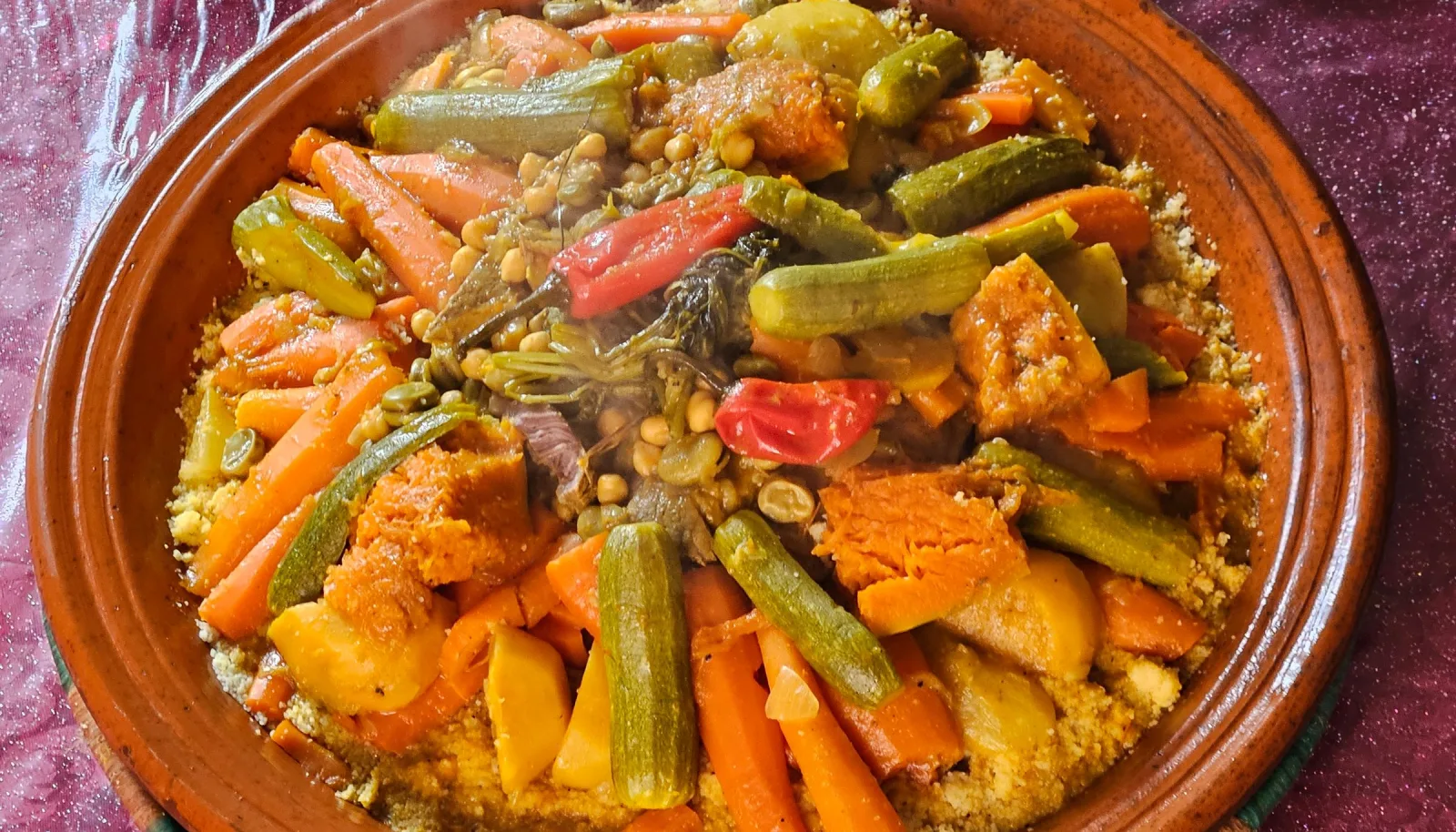
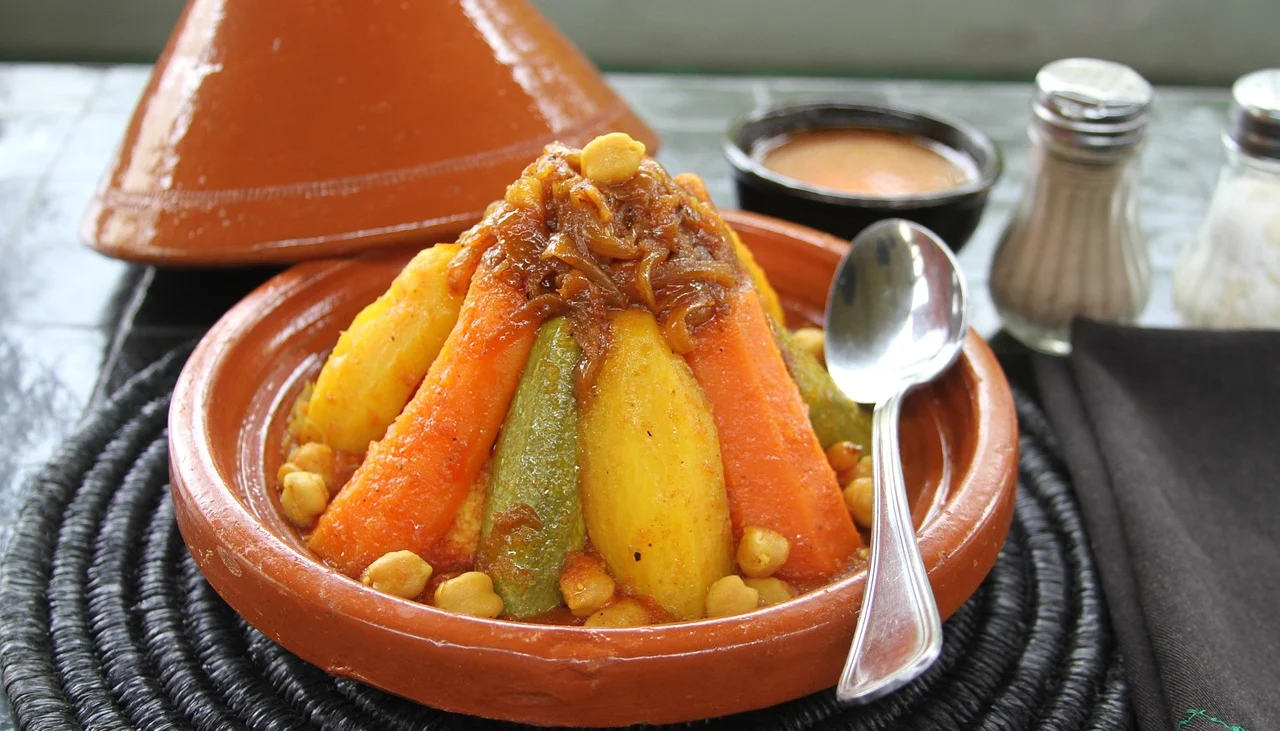
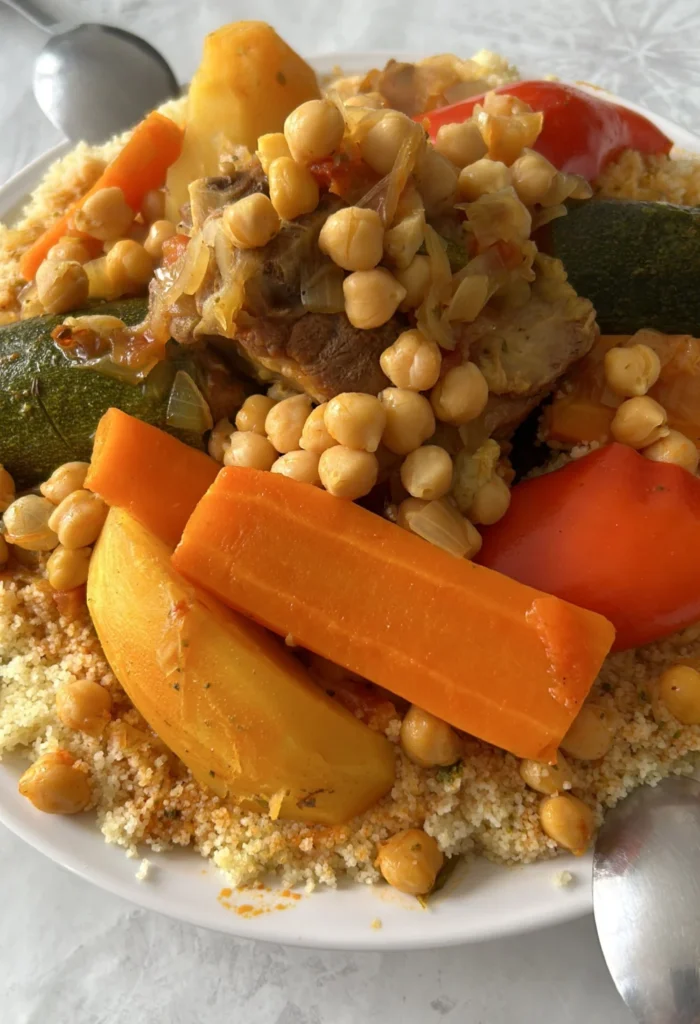
For Moroccan couscous, cooks traditionally steam the grain over a vegetable broth in a couscoussier, rolling it with olive oil and water between steamings, then pile it high with carrots, turnips, pumpkin, courgette, cabbage and chickpeas. It is the customary meal after Friday prayers.
Table of contents
A Friday and heritage dish
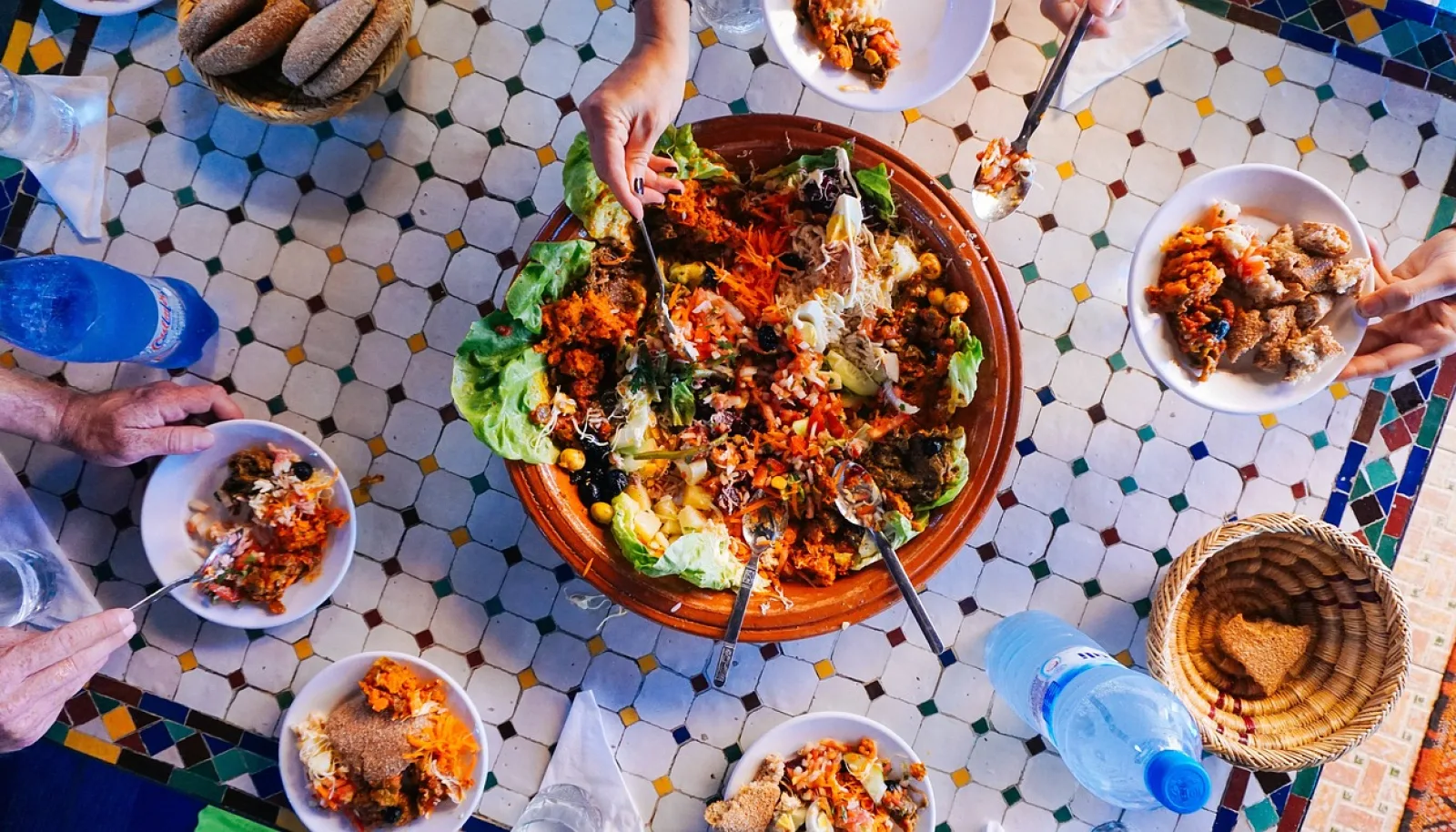
The Royal Mansour chef Karim Benbaba calls couscous “the customary Friday noon meal, following the prayer at the mosque” in his recipe for seven vegetable couscous. Wikipedia says that in December 2020 Algeria, Mauritania, Morocco and Tunisia together won UNESCO recognition for the knowledge, know how and practices of producing and eating couscous. The same entry says it is served in Morocco on Fridays after midday prayers.
Which seven vegetables?
| Source | Vegetables used |
|---|---|
| Royal Mansour chef | Carrots, turnips, courgette, pumpkin, green cabbage, aubergine, tomatoes; plus chickpeas and chilli peppers |
| Marocmama blog | Sweet potato, squash or pumpkin, turnip, carrots, green cabbage, courgette, aubergine; plus chickpeas. Options: hot peppers, fava beans, parsnips, potato |
| Wikipedia | Carrots, turnips, pumpkin, courgette and cabbage, with chickpeas, in broth with beef, lamb or chicken |
The lists overlap on carrots, turnips, pumpkin, courgette and cabbage. Choose seven that are in season.
Moroccan couscous: three steamings
The chef recipe is for 10 people and uses 1 kg of durum wheat couscous, 10 cl of olive oil and 3 litres of water in total.
- Salt the couscous, add olive oil and roll it with your hands.
- Sprinkle with 1 cup of water, break up lumps, and rest for 5 minutes.
- Steam in a basket over 2 litres of boiling water for 20 minutes.
- Tip it into a dish, separate the grains with oiled hands, add more water, and rest for 5 minutes.
- Steam again for 15 minutes, and repeat once more for 15 minutes.
The Marocmama recipe gives the steamings as about 20 minutes, another 20 minutes, then 15 to 20 minutes. Both agree on three steamings.
The broth and vegetables
The chef recipe makes a base broth from 1.5 litres of water, 150 g of onion, 100 g of tomato, a bunch of parsley and coriander, 80 g of tomato paste, 3 g of turmeric, 2.5 g of ground ginger, 12.5 g of fresh ginger and trimmings from carrots, turnips and courgettes. It simmers for 40 to 45 minutes and is sieved. The vegetables are then cooked in it. The chef’s vegetable weights are: 700 g carrots, 800 g turnips, 600 g courgette, 1 kg pumpkin, 450 g cabbage, 600 g aubergine, 600 g tomatoes, 160 g chickpeas and 300 g chilli peppers. Cook harder vegetables first so that none turn to mush.
The Marocmama version is smaller and simpler: 3 tbsp olive oil, 1 tsp each of turmeric, ginger and black pepper, 2 tsp salt, 2 tomatoes, 1 diced onion and bunches of parsley and coriander.
Is it vegetarian?
The recipes we consulted are meatless, while Wikipedia describes broths made with beef, lamb or chicken, so both versions are common.
Saffron?
Neither recipe uses saffron. Do not suggest it is part of the traditional dish.
Frequently asked questions
Why seven vegetables?
The origin of the number is unclear. One blogger says seven is considered lucky by some Moroccans.
Do I need a couscoussier?
Both recipes use a steamer basket. Wikipedia describes the couscoussier as the traditional two part pot.
Why steam three times?
The recipes use three steamings with water and olive oil between them, so the grains swell and separate. This is our reading of the method.
Sources
- recipe for seven vegetable couscous (royalmansour.com)
- Wikipedia (en.wikipedia.org)
- Marocmama blog (marocmama.com)