Table of contents
Where the Marrakech spice market is
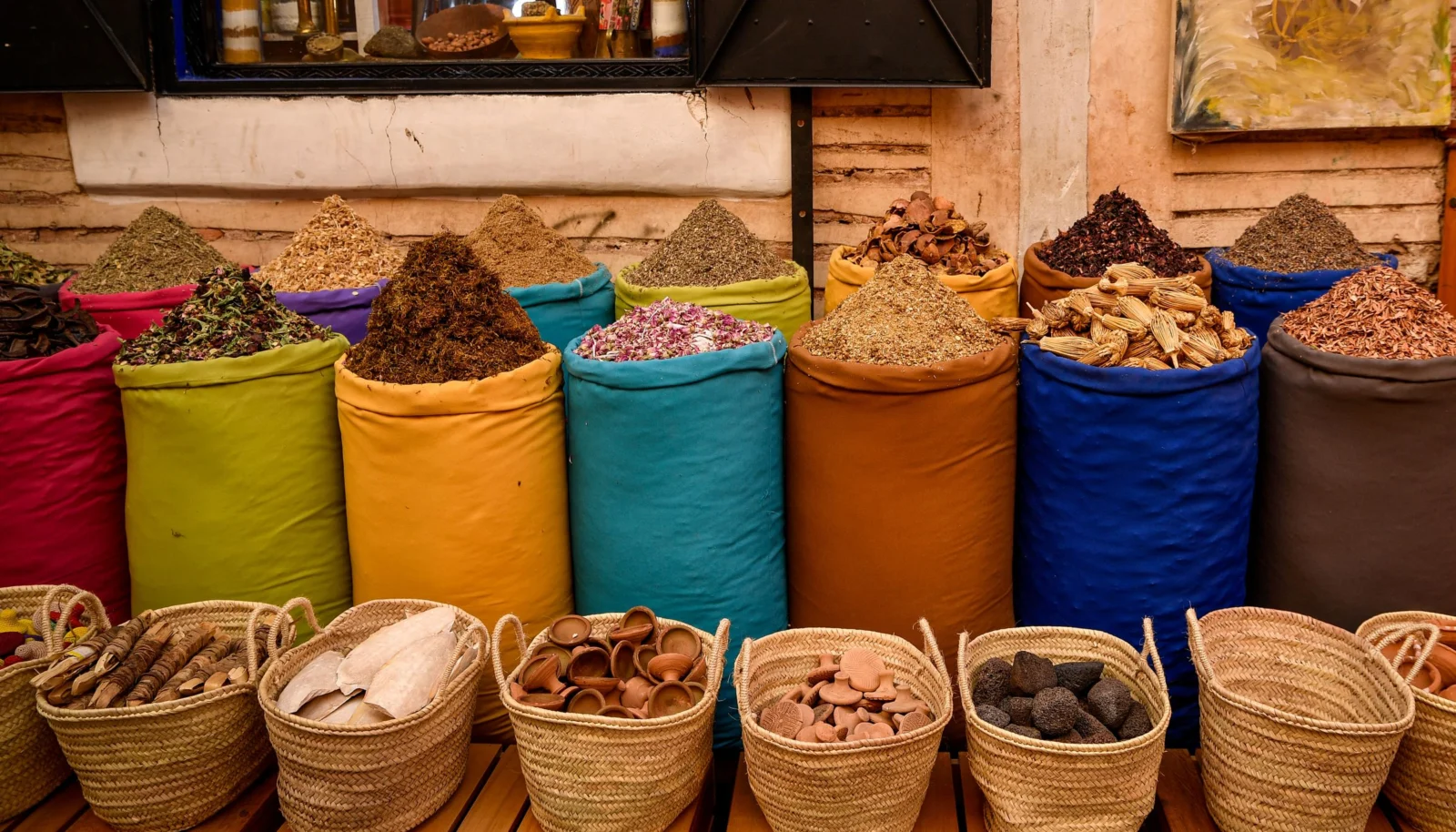
One travel guide (Passport and Stamps) places the spice souk in the Mellah, the old Jewish quarter, reached from Jemaa el Fna by Rue Riad Zitoun el Kdim, with the entry near Place des Ferblantiers (Tinsmiths Square) close to the synagogue. Layouts change, so check a current map once you reach the Marrakech spice market. Spice stalls also appear throughout the central medina.
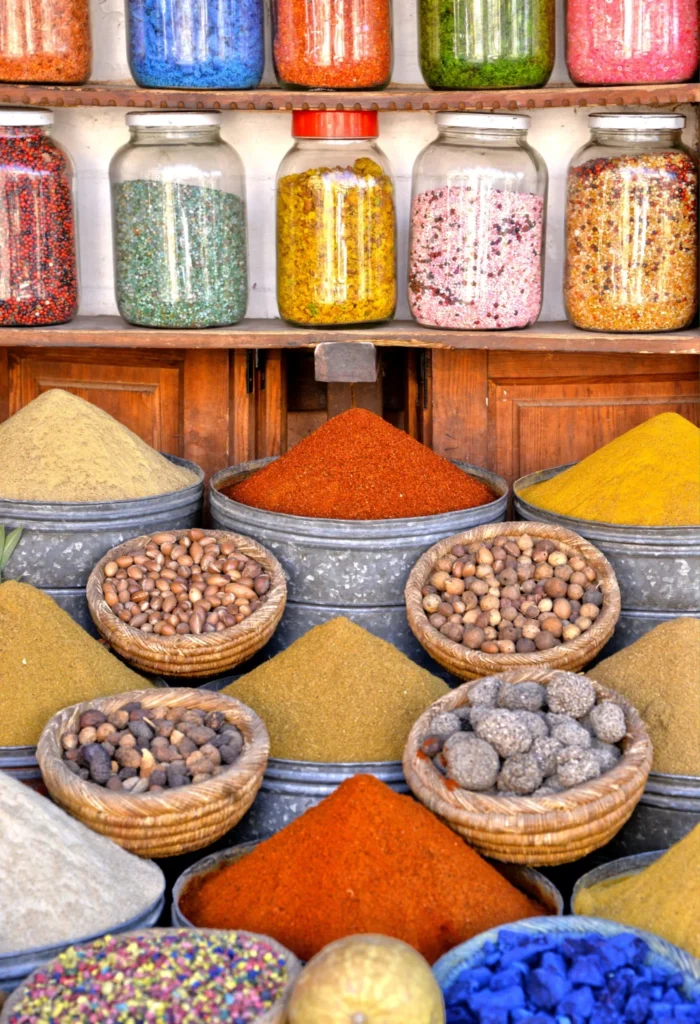
What you will find
| Product | Note from the source |
|---|---|
| Ras el hanout | Blends that differ from vendor to vendor |
| Whole spices | Cinnamon sticks, star anise, dried lime, black nigella |
| Saffron | Buy strands only; the guide says powder points to counterfeit goods |
| Herbs and flowers | Mint, rosebuds, orange blossom |
| Argan oil | Culinary and cosmetic (see Culinary or Cosmetic Argan Oil: What to Buy for What for how to tell them apart) |
| Herbal beauty products | Cooking powders and cosmetic herbs |
Buying advice from the source
- Ask to smell and sample before you buy.
- Expect to bargain; the guide says prices swing widely. We publish no prices.
- Midday is described as a good time to see locals shopping, and the Mellah as more local than the busiest medina lanes.
- Central alleys are described as having pushy sellers. Stay polite and firm.
Saffron checks
The guide advises whole strands only and says suspiciously cheap saffron is likely fake. For a fuller method, use How to Tell Real Saffron from Fake and Saffron in Moroccan Beauty Rituals: Tradition and Evidence, and consider buying from a cooperative in the growing area instead (see Taliouine Travel Guide: Morocco's Saffron Town and Taroudant: The Little Marrakech of the Souss).
Spice market recipe links
If you buy argan oil, almonds and honey, you can make amlou at home (see Amlou: The Moroccan Argan, Almond and Honey Spread). Saffron strands go into the dishes in Moroccan Chicken Tagine with Saffron and Moroccan Saffron Tea Recipe.