Table of contents
Tradition first, claims second
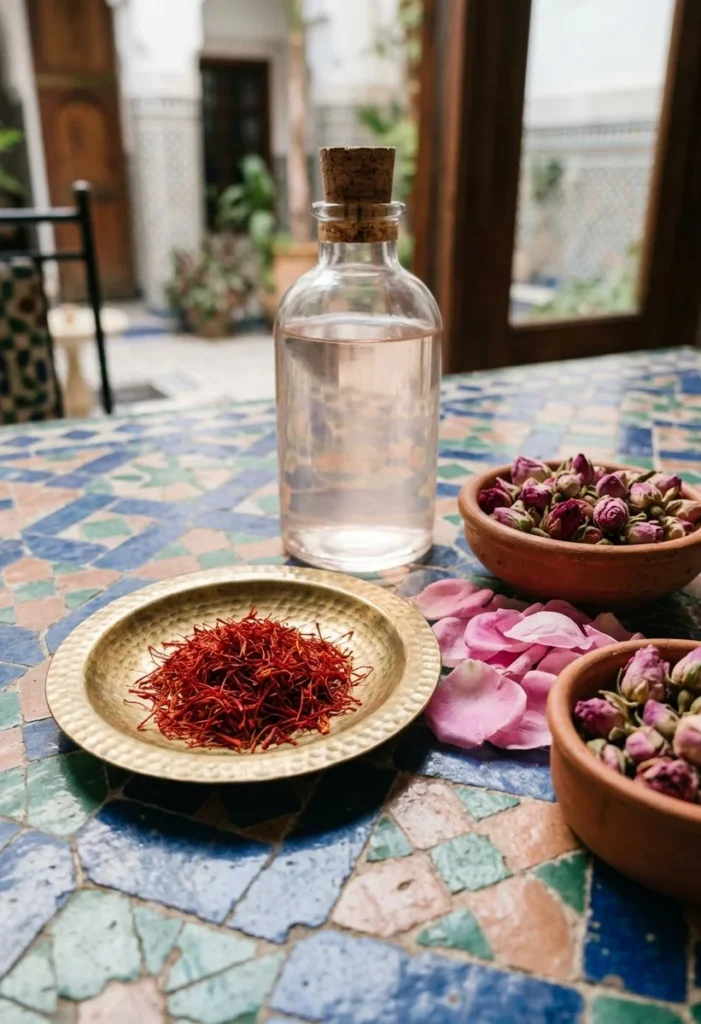
Saffron has a long history in beauty practices around the Mediterranean and the Middle East, and Morocco has its own record of using it. This guide to saffron in Moroccan beauty rituals separates what the sources say about tradition from what has been tested, because the two are often mixed together in beauty marketing. It is not medical or skincare advice.
Saffron in Moroccan beauty rituals: what sources record
The best documented account we found is the Aramco World report on Taliouine. It lists older, non culinary uses of saffron, including darkening the eyes in the way kohl does, painting designs on a bride’s face, dyeing wool, and staining cedar ceilings, along with a range of traditional remedies (Aramco World). These are historical practices, and the report does not describe how they were prepared or whether they are still followed today.
We looked for saffron in the better known Moroccan bridal rituals and found less than we expected. A description of a Moroccan wedding mentions saffron couscous in the wedding feast, and bridal beautification with a decorated kaftan, jewels, kohl, a milk bath, and henna to ward off illness and the evil eye, but it does not link saffron to the beauty rituals (Morocco Travel Blog). An account of the bride’s hammam visit names black soap and ghassoul clay as the products used, together with candles, incense, and the company of friends and family, and it does not mention saffron (Morocco World News Lifestyle). In other words, saffron appears at the wedding table and in older records of face and eye decoration, but we did not find evidence that it is a standard part of the hammam.
Saffron in beauty beyond Morocco
A 2019 review in the journal Cosmetics notes that saffron has been used cosmetically since ancient times. It cites Cleopatra, traditional Iranian medicine for improving the complexion, and traditional Greek medicine for refreshing facial skin (Mzabri and colleagues, 2019). The same review describes laboratory and early findings that saffron compounds, such as crocin, may absorb ultraviolet light, lighten pigment, and act as antioxidants. These findings are preliminary, and we could not verify the clinical trials that the review mentions, so they should not be presented as proven benefits.
What the evidence for health looks like
The clinical research on saffron that we found concerns the eyes, not the skin. A 2019 narrative review found that oral saffron or crocin may help some age related eye conditions, but it said the evidence was limited and long term safety data were scarce (PMC review). We found no strong clinical evidence for saffron as a treatment for ageing skin, and this article therefore makes no such claim.
Safety and cost
- Allergy. A skincare brand’s blog warns that saffron can cause allergic contact dermatitis in people who are sensitive to plants, with symptoms appearing within a day or two. It is a company source, but the caution is sensible. Test any new product on a small patch of skin first.
- Adulteration. Saffron sold for the kitchen can contain added dyes or other plant parts, as our guide on real and fake saffron explains. You should not put it on your skin.
- Homemade mixtures. Home preparations with water or milk have no preservatives and can spoil quickly.
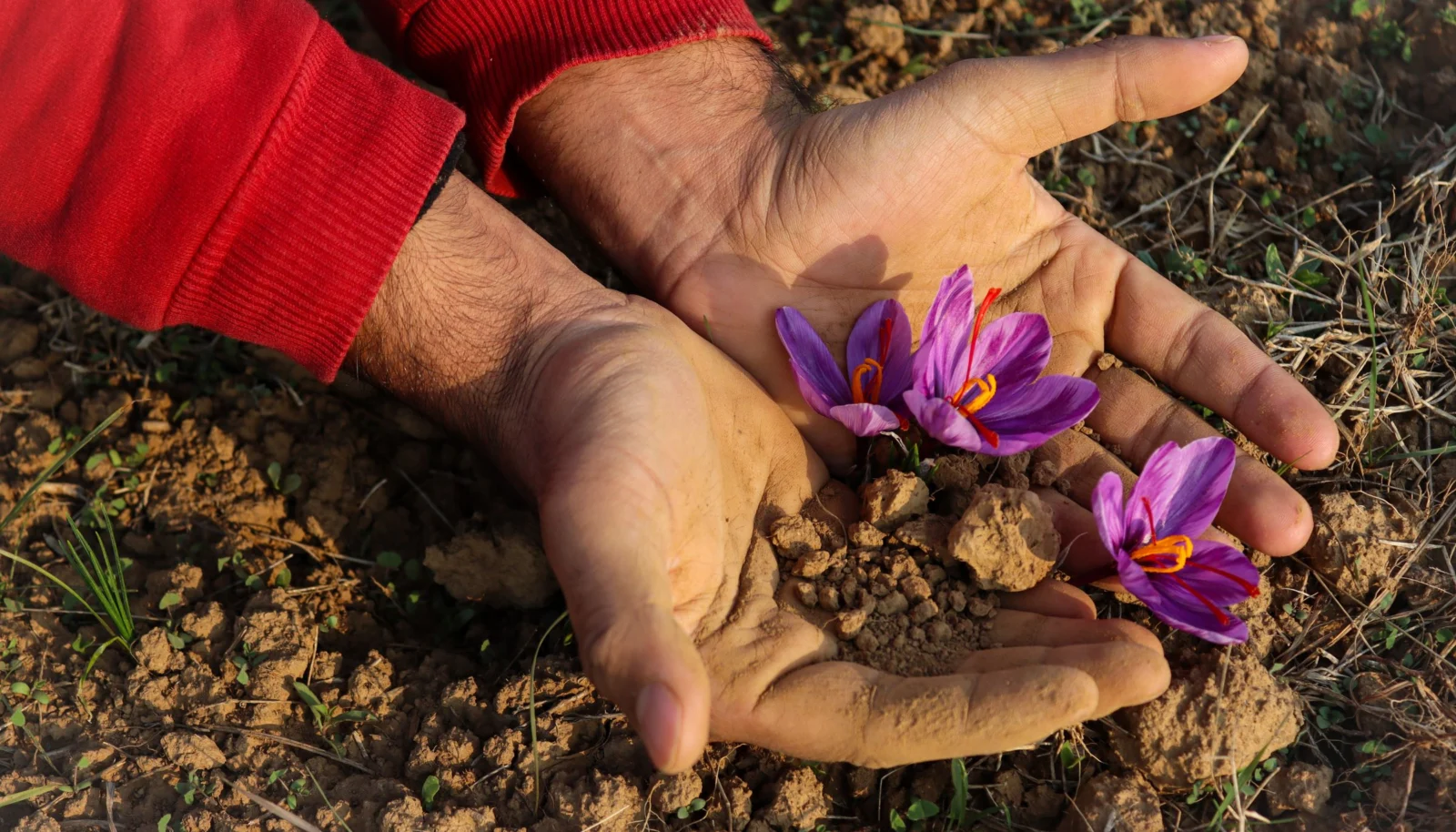
- Cost. Roughly 150 flowers make one gram of dried saffron, so using it in a cosmetic recipe is expensive.
- Pregnancy and medicines. Anyone who is pregnant or takes medication should ask a doctor before using saffron for health or beauty purposes.
A safer way to enjoy saffron
If you want to bring saffron into your routine, the lowest risk way is through food and drink, such as the saffron tea in our recipes, and with a modest amount. For skin, choose a product from a reputable maker and patch test it. Argan oil, another Moroccan beauty staple, has some published evidence for skin hydration, which we cover in our guide on argan oil and the skin.
Frequently asked questions
Is saffron used in Moroccan beauty rituals?
Historical accounts mention saffron for darkening the eyes and for painting bridal faces. We did not find it described in the hammam ritual.
Does saffron lighten skin?
Early laboratory research suggests that some of its compounds may reduce pigment, but this is not proven in people, and we do not recommend it as a treatment.
Can I make a saffron face mask at home?
We do not give a recipe, because we found no tested method and the risks include allergy, adulterated saffron, and contamination.
Is saffron safe on skin?
For many people it may be, but allergies occur, so patch test and ask a professional if you have skin conditions.
Sources
- Aramco World (archive.aramcoworld.com)
- Morocco Travel Blog (moroccotravelblog.com)
- Morocco World News Lifestyle (mwnlifestyle.com)
- Mzabri and colleagues, 2019 (mdpi.com)
- PMC review (pmc.ncbi.nlm.nih.gov)