Short answer
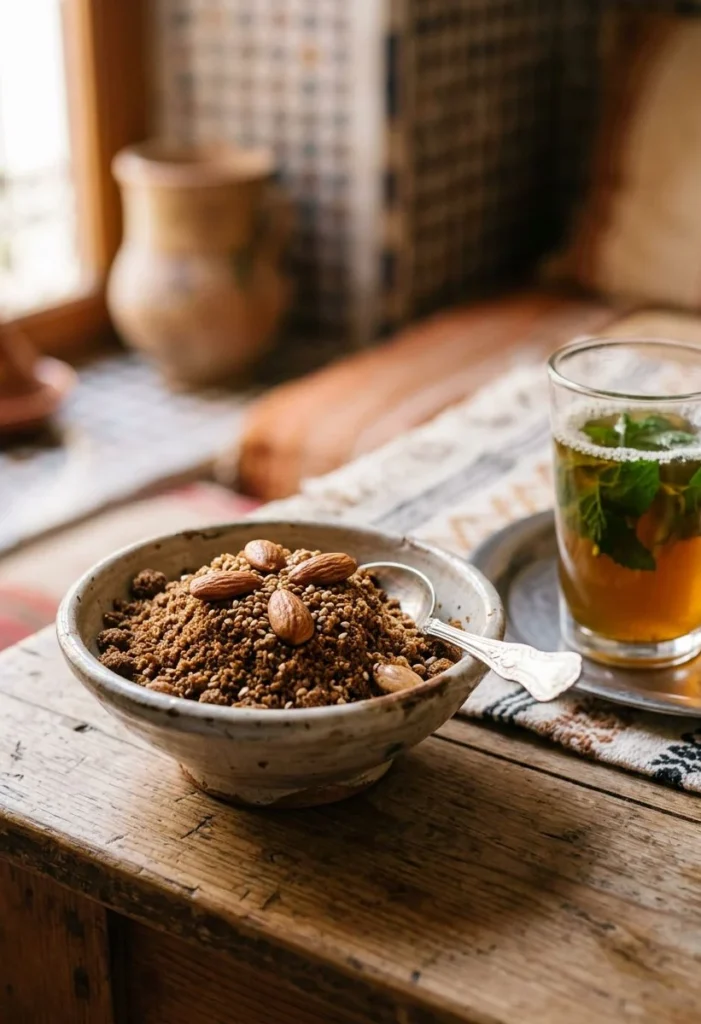
Moroccan sellou is a paste of toasted flour, ground almonds and sesame seeds, mixed with butter or another fat, spices and sometimes honey or sugar. It is eaten mainly in Ramadan, and also at weddings and births. Argan oil is used in some regional versions, not in the standard recipe.
Table of contents
Also written slilou or slilo, and called sfouf in some regions.
What Moroccan sellou is
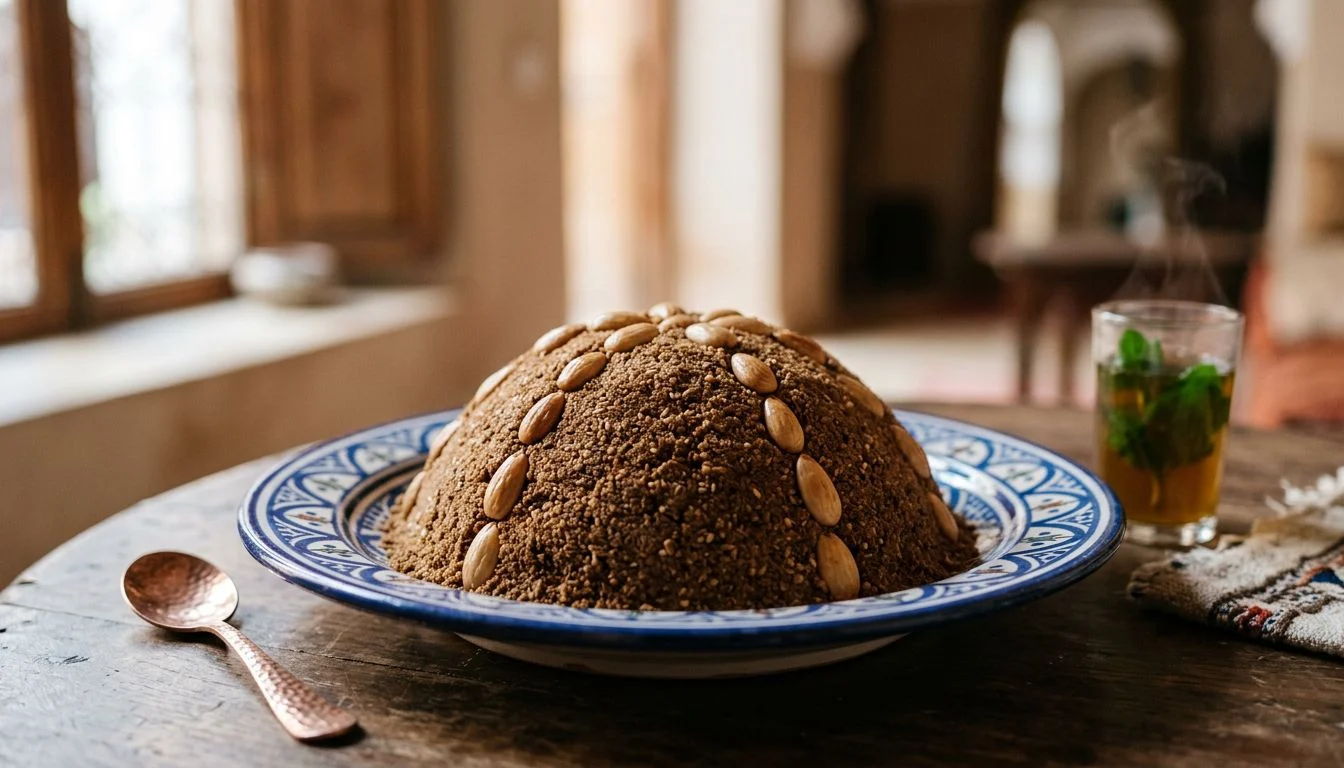
Morocco World News describes it as a nut paste known as an energy paste, made from almonds, sesame seeds and spices. It says the sweet appears at weddings, newborn celebrations and special occasions, and is particularly eaten at iftar in Ramadan. It is traditionally mounded into a pyramid on a plate and decorated with toasted almonds.
Names and versions
Morocco World News says four main versions exist: sellou, slilo or sfouf made with flour; tquawt without flour; zamita, toummette or bssisse, which use barley or argan oil in some regions; and taquenta, the Oujda version. The Journey Beyond Travel page also lists sfouf, slilou and zemmita, and says that bsiss in the Souss uses barley flour and argan oil.
Is argan oil traditional?
It depends on the version. Morocco World News says clarified butter is preferred in traditional recipes for its long lasting freshness, and that argan oil appears in regional variations. The Journey Beyond Travel recipe uses butter in its traditional version and offers argan, sesame and olive oil in a healthier version. Taste of Maroc uses clarified butter and mentions argan oil only as the author’s own healthier alternative. For this site, write: “argan oil is part of some Souss versions and of modern variations”. Do not say it is the traditional fat everywhere.
Recipe (Journey Beyond Travel version)
| Ingredient | Amount |
|---|---|
| All purpose flour | 1 kg |
| Sesame seeds | 500 g |
| Whole almonds | 500 g |
| Powdered sugar | 100 g, optional |
| Ground anise | 1 tbsp |
| Ground fennel seeds | 1 tbsp |
| Ground cinnamon | 2 tbsp |
| Ground nutmeg | 1½ tbsp |
| Mastic gum | ½ tsp |
| Salt | a pinch |
| Butter | 150 to 200 g |
| Honey | 150 g |
- Toast the flour alone for about 30 minutes at 180°C.
- Toast the almonds and sesame seeds separately for about 20 minutes.
- Grind the almonds and seeds to a powder or paste.
- Melt the butter and honey, and work them gradually into the dry mix by hand until it holds together.
Taste of Maroc uses a different balance: equal weights of almonds, sesame and flour (2.2 lb each), 1 lb of clarified butter, powdered sugar, cinnamon and anise, with sesame toasted for 15 to 20 minutes and flour for 30 minutes or more. It says the sellou keeps for several months in an airtight container, or longer in the freezer. Both are home recipes, so adjust the quantities to your taste.
Storage and timing
Morocco World News says sellou is usually made one to two weeks before Ramadan to last the month, and that it freezes well.
Origins
Journey Beyond Travel says the origins reportedly go back to Amazigh culture during the Almoravid dynasty in the eleventh century. This is a single travel site claim, so treat it as a story rather than an established fact.
Frequently asked questions
Is sellou the same as sfouf?
In many descriptions yes, but sfouf can refer to the flour based version. The sources list the two names together, so sellou is also called sfouf.
Is sellou the same as amlou?
No. Amlou is a spread of argan oil, almonds and honey (see Amlou: The Moroccan Argan, Almond and Honey Spread); sellou is a dry, crumbly mix with toasted flour.
Can I make it without butter?
The Journey Beyond Travel page offers argan, sesame or olive oil in a healthier version. It will taste different.
Sources
- Morocco World News (moroccoworldnews.com)
- Journey Beyond Travel (journeybeyondtravel.com)
- Taste of Maroc (tasteofmaroc.com)