Short answer
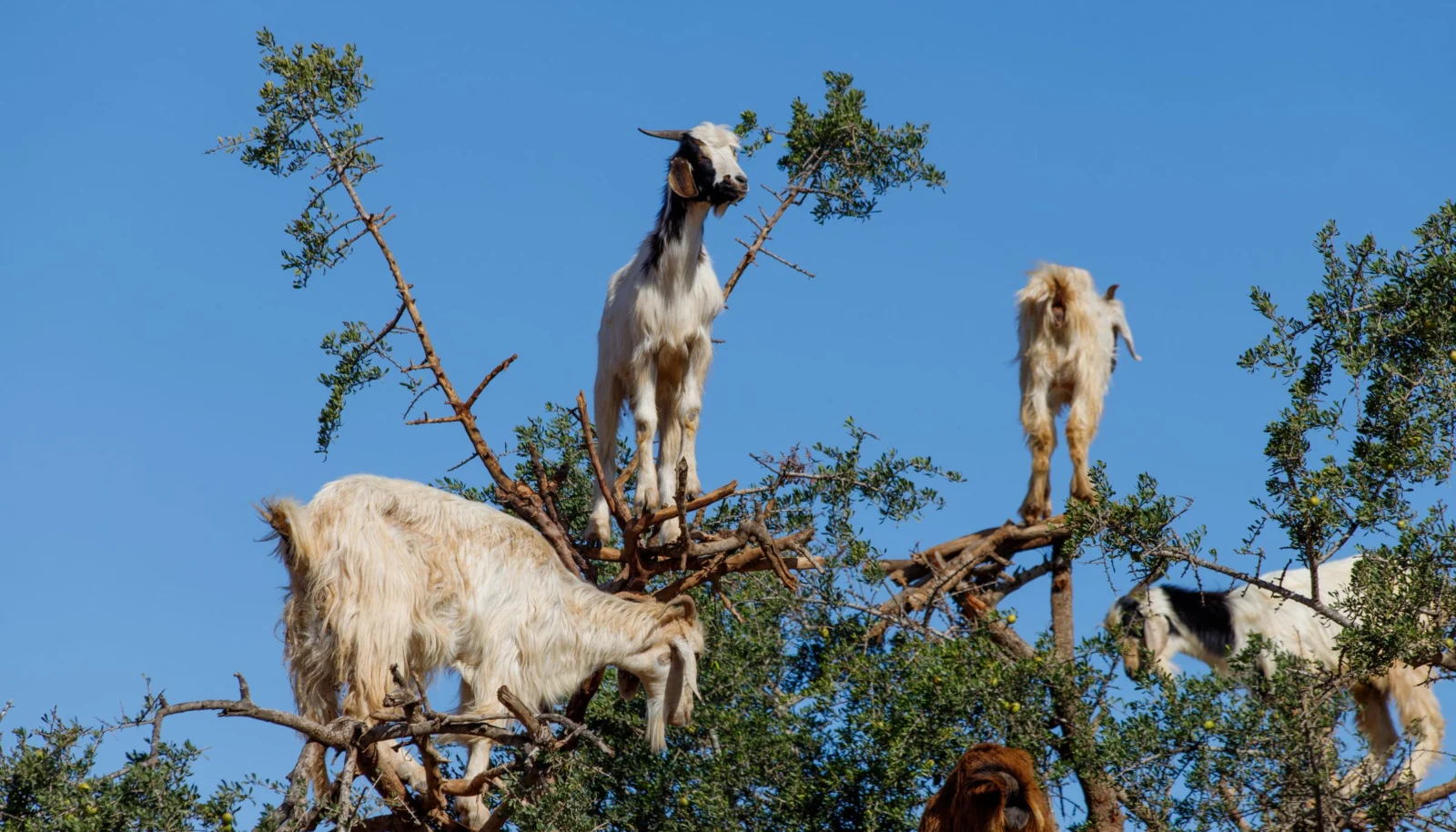
The behaviour is real: the famous argan goats climb trees to eat the fruit. But the groups of goats posed in trees by the road are largely set up for tips, and too many goats damage young trees. The oil sold today is mostly not made from nuts collected from goat droppings.
Table of contents
Is it real? Two sources agree
National Geographic says goats climb argan trees naturally, drawn by the sweet, pulpy fruit, and that the behaviour is “instinctual to an extent”. Snopes reaches the same verdict: the goats are genuine, not a tourist invention. Snopes adds that the fruit ripens in June, when goats are most motivated to climb.
What is staged
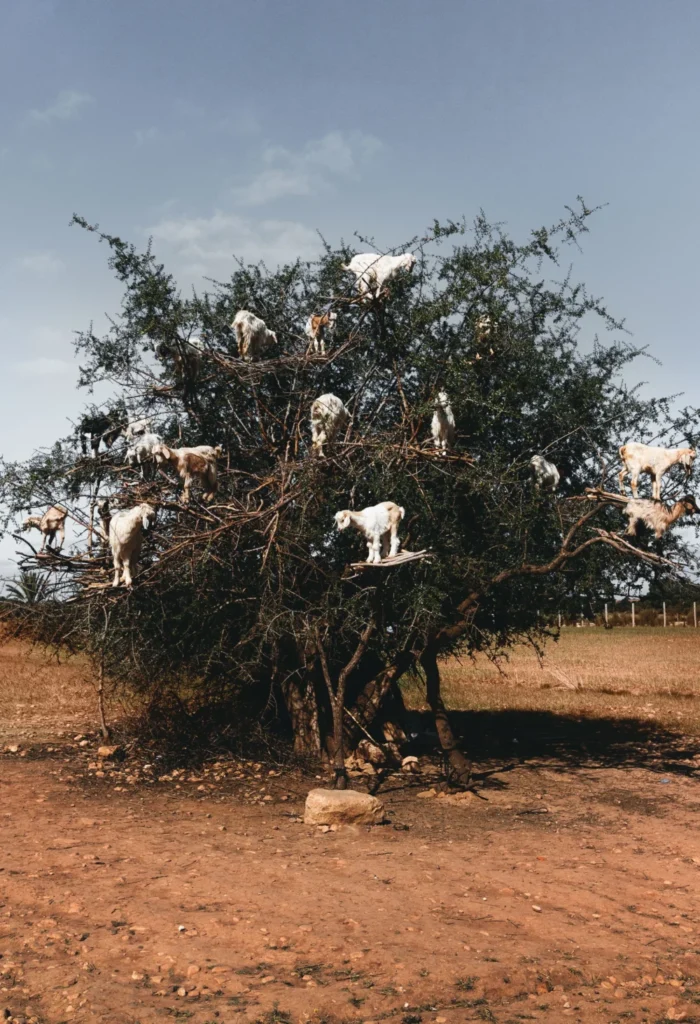
National Geographic reports that since the early 2000s farmers have placed goats in trees for tips from tourists. It counts nine herds along the road of about 100 miles between Marrakech and Essaouira, and describes training with argan fruit, grain and a stick. Some herders carry the animals into the tree. Goats stand there from late morning to mid afternoon, when traffic is heaviest.
Welfare concerns
The same article quotes animal welfare advocates who say the practice affects the animals’ nutrition, health and mental state. A veterinarian, Adnan El Aji, warns of heat stress and dehydration in summer, and one documented case involved a goat that fell and needed treatment for a broken leg.
Do goats help the argan forest?
Partly. National Geographic says goats eat the fruit and spread seeds in their droppings, which supports regeneration. The ecologist Jose Fedriani, quoted by both articles, says they also eat leaves and seedlings, which hurts the forest during droughts. He tells Snopes: “We need to have a balance between the number of goats and number of trees.” This links to the forest article, The Argan Forest and UNESCO: Why the Trees Are at Risk.
The old story about droppings
Wikipedia’s argan oil entry says traditionally the kernels were retrieved from goat droppings, which cut the labour of harvesting. Mental Floss says that direct picking from the tree has since replaced this. Present the droppings method as a historical practice and make clear that cooperatives today do not rely on it. Confirm with a cooperative if you can.
If you want to see the argan goats
Skip the roadside stops where goats are placed in trees and tip nothing for them. Visit an argan cooperative or walk in the argan forest near Essaouira or Agadir instead (Where to See Argan Trees in Morocco, and What to Know About the Goats, How to Visit an Argan Cooperative Near Essaouira).
Frequently asked questions
Do goats really climb trees?
Yes, to reach the fruit, according to National Geographic and Snopes.
Is the goat photo staged?
Often, at the roadside stops. National Geographic describes how the animals are trained or placed.
Is argan oil made from goat droppings?
Historically the nuts were collected that way. The Mental Floss history says picking from the tree has replaced it.
Is it harmful to the goats?
Welfare groups say so, and a vet quoted by National Geographic warns of heat stress.
Sources
- National Geographic (nationalgeographic.com)
- Snopes (snopes.com)
- Wikipedia's argan oil entry (en.wikipedia.org)