Short answer
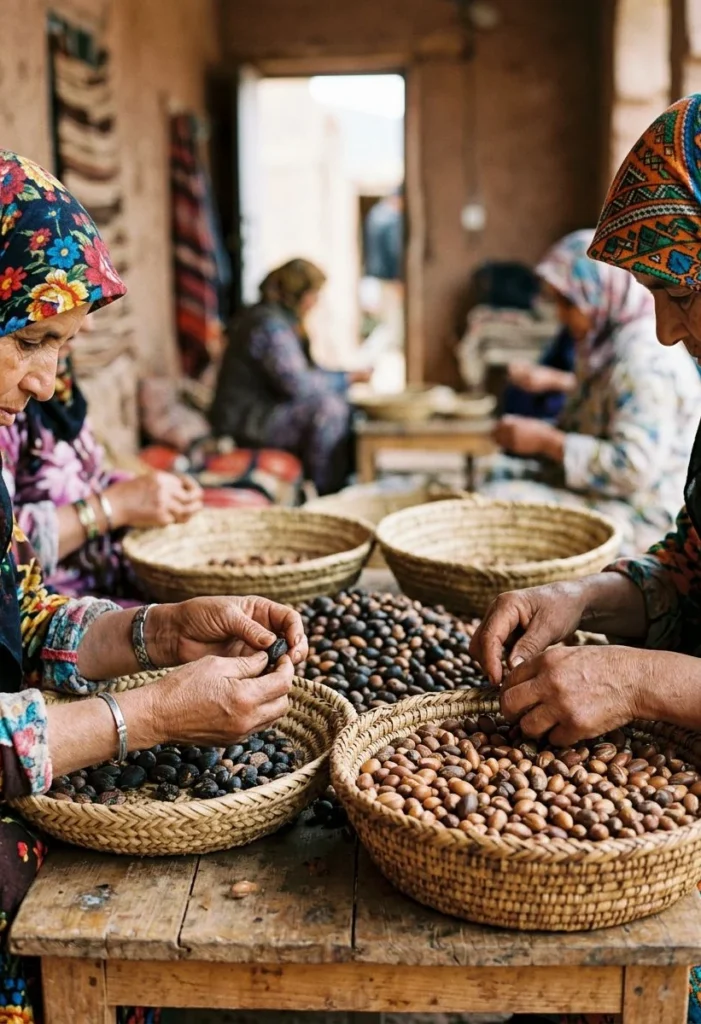
Most argan oil is made by Amazigh women, and many of them work in argan cooperatives in southwestern Morocco. Women make up between 85 and 95 percent of the members of the cooperatives studied in a 2017 article by Patricia Huang, and they do the demanding work of cracking the stones and separating the kernels while passing the knowledge on to younger women (International Journal of Intangible Heritage). The cooperatives have brought women income and independence, but the wages are modest and the model has real limits, as this article explains.
Table of contents
How the argan cooperatives began
According to Huang, Professor Zoubida Charrouf of Mohammed V University founded Amal in 1996 as the first women’s argan oil cooperative, after scientific research showed the value of argan oil and drew international commercial interest to what had been a little known product. The sector then grew quickly, especially between 2005 and 2010. Wikipedia reports that around 300 small firms, mostly cooperatives, were operating in the area inland from Essaouira in 2020, and that the largest union, UCFA, brings together 22 cooperatives (Wikipedia). UNESCO lists the practices and know how around the argan tree as intangible heritage and describes women as the main knowledge holders, who teach their daughters from childhood (UNESCO).
How the oil is made
The Al Amal cooperative, a group of about 60 Amazigh women in the village of Ighrem in Tiznit province, describes five stages in a story published by a skincare brand that sells its oil (Evan Healy):
- Hand harvesting of fallen argan fruit.
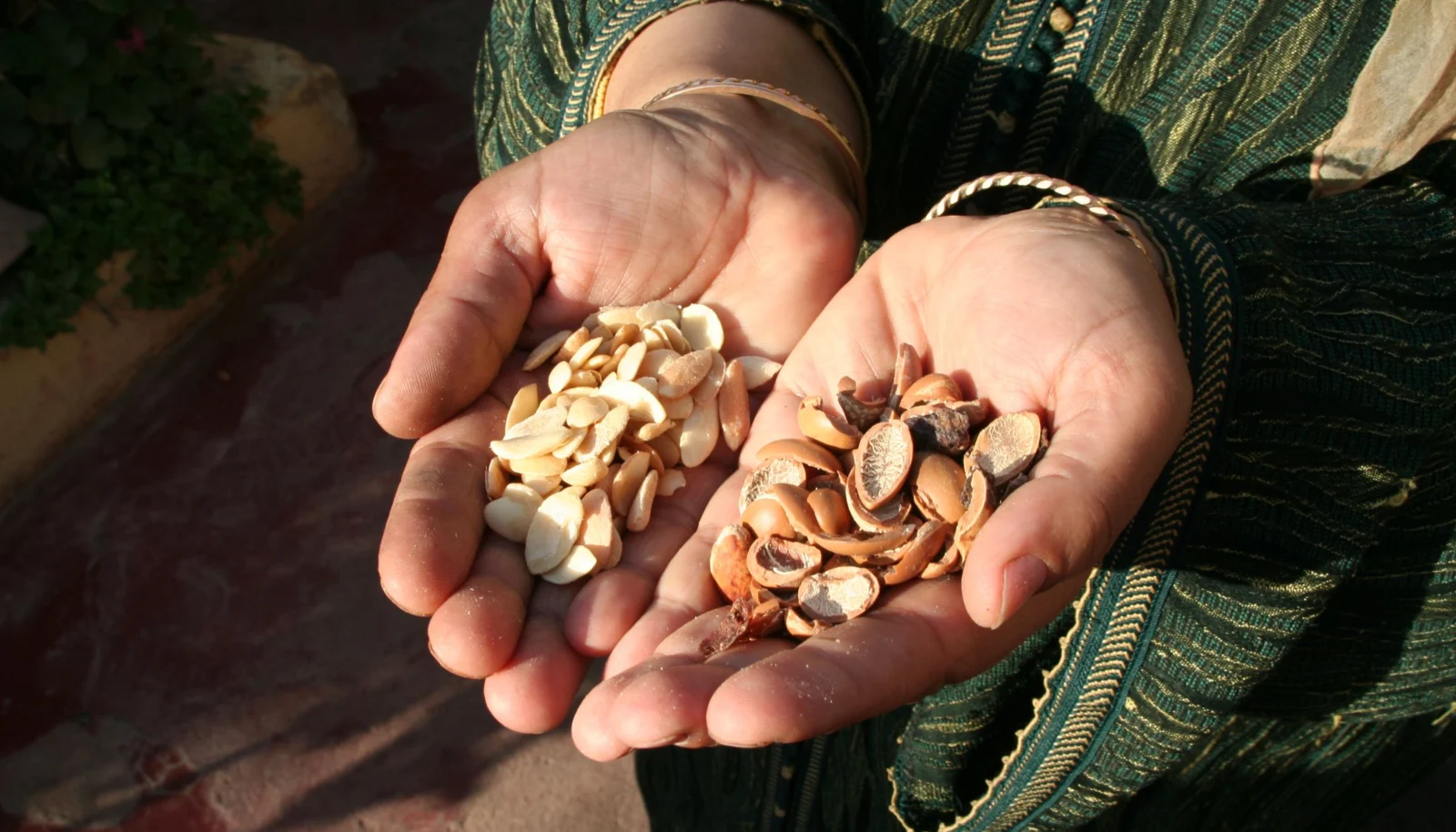
- Removing the flesh by hand and cracking the stone to reach the kernels.
- Grinding and pressing the kernels with stone.
- Filtering out sediment and fibre.
- Bottling the golden oil.
Because this account comes from a brand, treat it as one cooperative’s description. For culinary oil, the kernels are roasted before pressing, a step that does not apply to cosmetic oil, as our guide to culinary and cosmetic argan oil explains.
What the women earn
The sources give different pictures, which is why we show them side by side.
| Source | Figure |
|---|---|
| Huang, 2017 | In 2016, women produced about 0.8 to 1.5 kg of kernels a day at 40 to 45 dirhams per kilogram, which gave monthly earnings of 500 to 1,600 dirhams, averaging 1,000 to 1,200 |
| WIPO | By 2010, women earned about 6 euros a day in cooperatives, ten times more than before |
| Wikipedia | Women typically earn under 221 US dollars a month, and some earn as little as 50 dollars, below the minimum wage |
The figures differ by year, cooperative, and method of counting, and Wikipedia adds that mechanically produced oil is cheaper and puts pressure on traditional producers. A fair summary is that cooperative work pays more than the alternatives that many of these women had, but it is not a high income.
Gains and limits
Huang’s study reports real gains. Cooperatives gave women the freedom to walk to work without a chaperone and the chance to take part in decisions. It also found limits:
- Literacy classes had mixed results, and many women found the standard Arabic lessons too formal, so most programmes have since declined.
- Women are often treated as hired workers and not as full members with a say in the business.
- Many members lack the business training needed for marketing and sales.
- Younger women show little interest in the manual work, even though it provides employment.
These points matter for readers who want to support the sector, because they show where help is most useful: fair pay, training, and shared ownership.
How to buy responsibly
- Buy from a named cooperative, and ask to see the work, which many cooperatives allow. Our guide to visiting a cooperative will cover what to expect.
- Beware of fake cooperatives. Consoglobe reports that some private companies pose as women’s cooperatives to claim official status (Consoglobe). Our guide to fake argan oil lists the checks to make.
- Be careful with tour stops. A travel guide warns that some tours include a cooperative stop where the guide earns a commission, which can mean higher prices (Nomado Travel).
- Pay a fair price. Very cheap oil leaves little for the producers, and our guide to argan oil prices shows what the figures look like.
- Ask about pay and membership. A good cooperative will explain how its members are paid.
Frequently asked questions
Who makes argan oil?
Mostly Amazigh women in southwestern Morocco, working at home or in cooperatives.
When did the cooperatives start?
According to Huang, the first one, Amal, was founded in 1996.
Do the women earn a good wage?
They earn more than in some alternatives, but the sources show modest and varying incomes.
Is buying argan oil from cooperatives always ethical?
Not automatically. Some firms present themselves as cooperatives without being one, so check the seller.
Sources
- Wikipedia (en.wikipedia.org)
- UNESCO (ich.unesco.org)
- Evan Healy (evanhealy.com)
- Huang, 2017 (ijih.org)
- WIPO (wipo.int)
- Consoglobe (consoglobe.com)
- Nomado Travel (nomadotravel.app)