Short answer
Real saffron is the dried red stigma of the Crocus sativus flower. Whole deep red threads, a honey and hay aroma, a slightly bitter taste and a slow release of golden colour in water are good signs. A very low price and a missing origin are warning signs. Home checks give you clues, and only a laboratory test can prove quality.
Table of contents
- Why saffron is faked
- What real saffron looks like
- Six checks you can do
- Tests that prove very little
- What laboratory grades mean
- Moroccan saffron: what to ask
- After you buy
- Real saffron and common fakes side by side
- A buying scene, step by step
- If you think you bought fake saffron
- A quick checklist to keep in your phone
- Frequently asked questions
- Conclusion
- Sources
- What we verified
Saffron is one of the most expensive spices in the world, and it is also one of the most copied. I live in Morocco, where saffron grows around Taliouine and is sold in markets from Marrakech to Essaouira. A stall of red threads can look convincing even when it is not.
This guide explains why saffron is faked, what real threads look like, six checks you can do at home, and what those checks cannot tell you. It ends with the questions I would ask any seller.
Why saffron is faked
Each crocus flower produces only three stigmas. They are picked by hand and then dried, so a small quantity of saffron needs a very large number of flowers and a lot of labour. Roughly 150 flowers give one gram of dried saffron, so a kilogram needs around 150,000 flowers (Wikipedia). Because the spice costs so much, a dishonest seller has good reason to stretch it or to sell something else in its place.
The usual tricks are these:
- Dyed plant material such as corn silk, shredded fibres or coloured petals.
- Safflower, sometimes sold as “Mexican saffron” or “American saffron”. It is a different plant with a different taste.
- Powder mixed with turmeric or paprika. Powder is much harder to judge because the threads that show quality are gone.
- Threads sprayed with sugar, oil or glycerin so that they weigh more.
- Lower grade saffron sold under a premium label.
What real saffron looks like
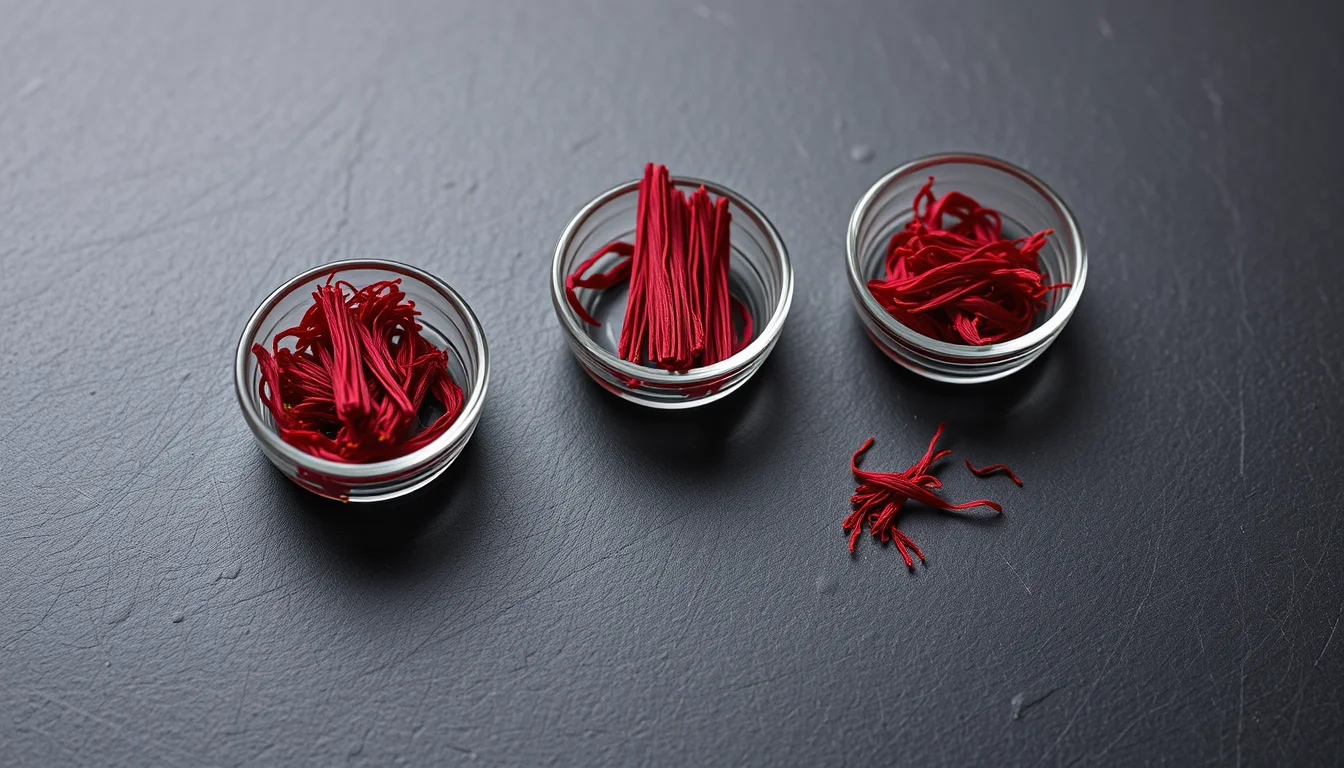
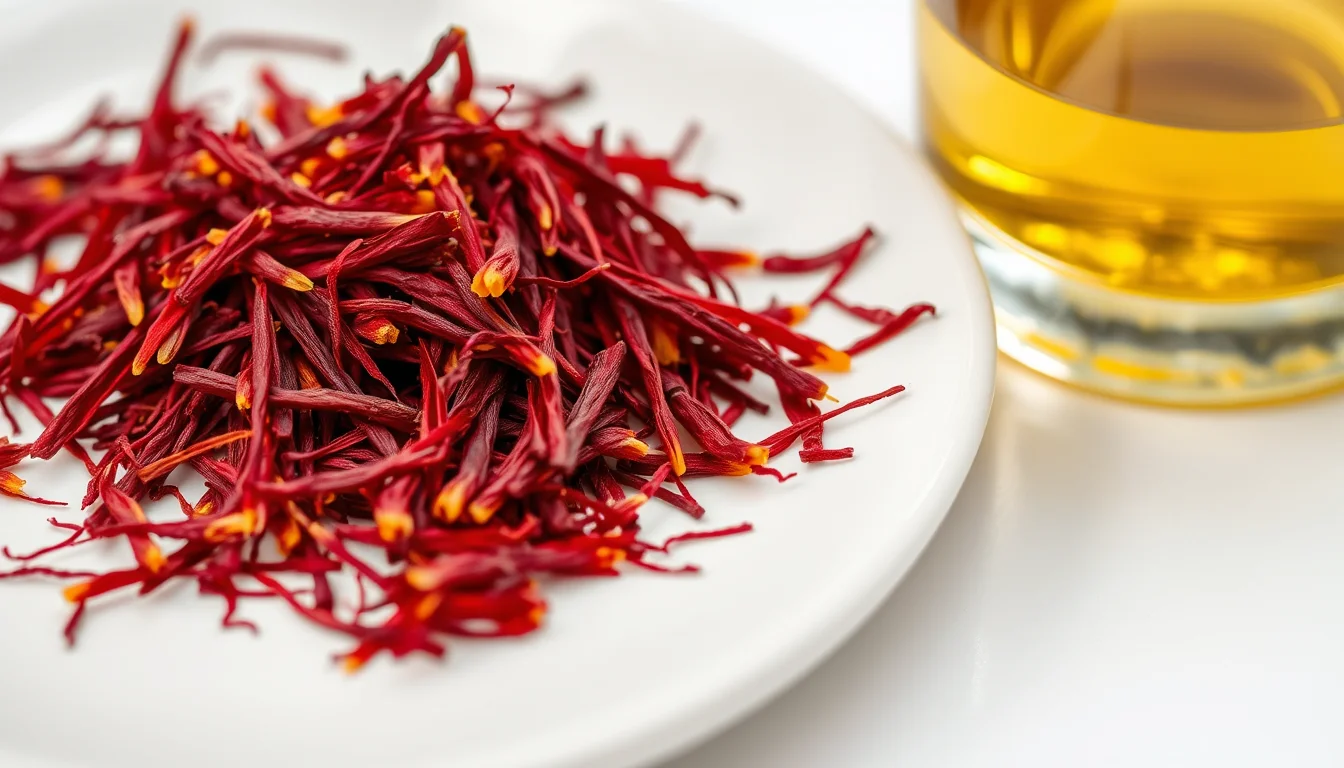
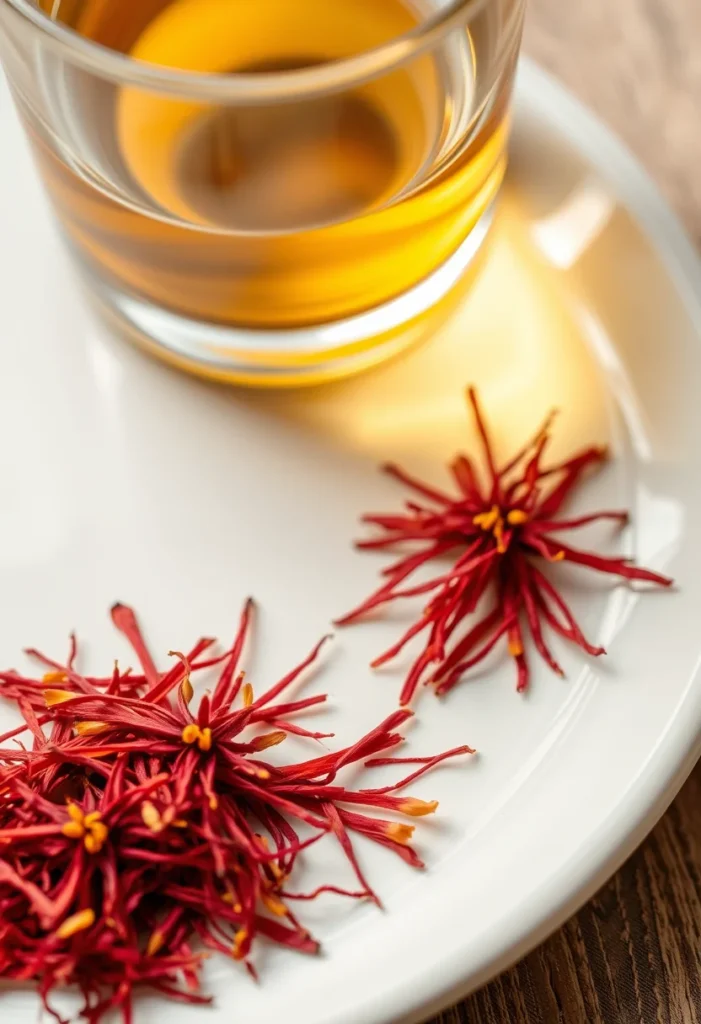
Good saffron comes as thin threads in a deep red colour. Many threads have a lighter orange or yellow end, and one end often flares like a tiny trumpet. The threads look dry and matte. They should not look wet, shiny or sticky. A few broken pieces are normal, but a lot of yellow or white bits lowers the grade.
Colour alone can mislead, because dye can make almost anything look red. The checks below work best when you use several of them together.
Six checks you can do
1. Look closely
Spread a few threads on a white plate in daylight. You want thin, trumpet shaped threads with an even red colour. Be suspicious of flat flakes, uneven fibres or foreign matter.
2. Smell it
Real saffron smells sweet and floral, with a note of honey and hay and a slight metallic edge. A chemical, musty or fishy smell is a bad sign. Almost no smell at all can mean the saffron is old.
3. Taste one thread
Put a single thread on your tongue. It should taste slightly bitter, and your saliva turns golden. A sweet taste suggests sugar or syrup. A sharp, unpleasant taste means you should stop and spit it out.
4. Try the cold water test
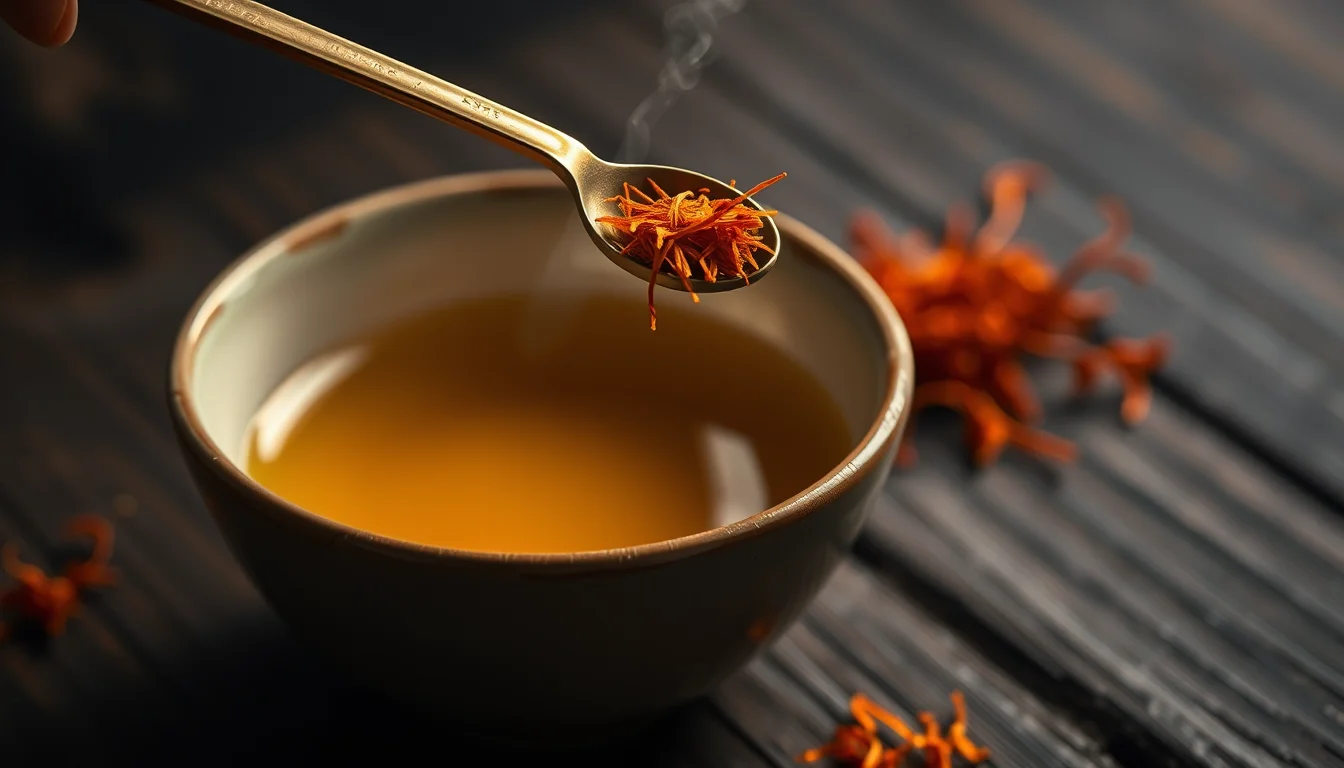
Drop two or three threads into a small glass of cold water and wait a few minutes. Real saffron releases golden yellow colour slowly, and the threads stay red for a while. If the water turns bright red almost at once, or the threads go pale quickly, dye is likely.
This is a popular and useful test. It is a clue only, because some fakes are made to pass it and some old genuine saffron behaves oddly.
5. Rub a thread on damp paper
Press a damp thread on white paper, or rub it between your fingers. Real saffron leaves a yellow or orange stain. A strong red stain points to dye.
6. Read the price and the label
A very low price is a serious warning, because real saffron is expensive to produce. Look for the origin, a harvest year, a batch number and the name of the producer or cooperative. A label that says only “premium saffron” tells you nothing.
Tests that prove very little
Many websites recommend a baking soda test, a hot water test or burning a thread. People share these widely, but they are not standard methods and the results vary with the sample and with how you do them. If you use one, treat it as a weak clue and combine it with the checks above.
What laboratory grades mean
The international standard ISO 3632 describes how saffron is graded in a laboratory. It measures compounds linked to colouring strength (crocin), bitter taste (picrocrocin) and aroma (safranal) and places the saffron in quality categories. ISO 3632 sorts saffron into three commercial categories, with category I as the best. Category I needs a colouring strength of at least 200, a bitterness value of at least 70 and an aroma value between 20 and 50 (Bergomi and colleagues, 2022). The same authors note that this test cannot always reveal adulteration with other plants. A laboratory report is the only reliable proof of quality, so it is fair to ask a serious seller whether one exists for the lot you are buying. For more detail, see the guide to saffron grades.
Letters and trade names such as “Grade A” or “super” are marketing terms. They have no single legal meaning.
Moroccan saffron: what to ask
Moroccan saffron is grown mainly around Taliouine in the south of the country. Taliouine saffron has Protected Designation of Origin (PDO) status, which is meant to allow traceability back to the cooperative and the producer. Farmers there have complained that counterfeits sold for less than a euro a gram in Casablanca damage its reputation (Gulf News). When you buy locally or online, ask these questions:
- Which village or cooperative produced it?
- In which year was it harvested?
- Are these whole threads, and may I smell them before I buy?
- Is there a laboratory report for this lot?
- How is it packed, and how long will it keep?
A seller who answers calmly and specifically is usually a better sign than any single home test. The guide to buying in Morocco lists places to start.
After you buy
Keep saffron in an airtight container away from light, heat and damp. Old saffron loses colour and aroma even when it is genuine, so a weak result from a very old jar does not always mean fraud. The storage guide explains how to keep it fresh, and the guide to amounts shows how far a small pinch goes.
Real saffron and common fakes side by side
| Check | Real saffron | Common fakes |
|---|---|---|
| Shape | Thin thread with a trumpet shaped tip | Flat flakes, uneven fibres, sometimes tiny sticks |
| Colour | Deep red, often a lighter orange or yellow end | Uniform bright red, or red with white patches |
| Surface | Dry and matte | Shiny, oily or slightly sticky |
| Smell | Sweet, floral, honey and hay | Chemical, musty, fishy or almost none |
| Taste | Slightly bitter, saliva turns golden | Sweet, sharp or tasteless |
| Cold water | Golden yellow, released slowly, threads stay red | Red at once, threads fade fast |
| Damp paper | Yellow or orange stain | Strong red stain |
Use the table as a summary of the six checks, and remember that one column does not prove anything alone.
A buying scene, step by step
Imagine you are at a spice stall in a Moroccan market. The seller offers a small bag of red threads and says the saffron is “from Taliouine, first quality.” Here is how I would handle the conversation.
- Ask to see the threads on a white surface, and look at the shape and colour.
- Ask to smell them. Take your time, and breathe in slowly.
- Ask which village or cooperative produced them, and in which year.
- Ask whether a laboratory report exists for this lot.
- Buy the smallest amount the seller will sell, and pay a fair price without heavy bargaining.
- At home, run the cold water test and the damp paper test, and taste one thread.
- If everything matches, go back and buy more. If it does not, you have lost very little.
This approach costs a little time, and it protects you from the most common mistake, which is to buy a large amount from the first stall.
If you think you bought fake saffron
- Keep the packaging, the receipt and a few threads in a sealed bag.
- Take photographs of the threads and of the label.
- Contact the seller politely and ask for an explanation or a refund.
- If you bought online, contact the platform and your payment provider. Consumer rules differ by country.
- Consider sending a sample to a laboratory if the purchase was large. A test report is the strongest evidence you can have.
A quick checklist to keep in your phone
- Whole threads, deep red, trumpet shaped tips.
- Honey and hay aroma, slightly bitter taste.
- Golden colour in cold water, slowly.
- Origin, harvest year and batch number on the label.
- A price that is believable for real saffron.
- A seller who answers questions without hurry.
Frequently asked questions
Is powdered saffron safe to buy?
It can be, but it carries more risk because you cannot see the threads. Buy powder from a source you trust, or grind whole threads yourself.
Why does saffron colour water yellow and not red?
The compound that colours food dissolves as a golden yellow. The threads themselves stay red, so this is normal.
Does a high price prove that saffron is real?
No. A very low price is a warning, but a high price proves nothing by itself. Check the origin, the harvest year and any test report.
Can I use a substitute?
Some substitutes give colour, and none gives the same flavour and aroma. The guide to substitutes explains what works in which dish.
Conclusion
No single test settles the question. Look, smell and taste, run the cold water test, read the label and listen to how the seller answers. If you buy often, ask for a laboratory report, and buy small amounts until you trust the source.
Sources
- Aramco World, Morocco’s Threads of Red Gold (2013) (archive.aramcoworld.com)
- Gulf News, Moroccan saffron farmers battle knockoff versions (2018) (gulfnews.com)
- Wikipedia, Saffron (en.wikipedia.org)
- University of Vermont workshop paper on Moroccan saffron quality (2019) (uvm.edu)
- Bergomi and colleagues, saffron quality study (2022) (pmc.ncbi.nlm.nih.gov)
- CulinaryLore, how to check if saffron is fake (culinarylore.com)
- Culture Trip, saffron harvest in Morocco (theculturetrip.com)
What we verified
Last checked: October 4, 2026
Sources:
- Aramco World, Morocco’s Threads of Red Gold (2013) (archive.aramcoworld.com)
- Gulf News, Moroccan saffron farmers battle knockoff versions (2018) (gulfnews.com)
- Wikipedia, Saffron (en.wikipedia.org)
- University of Vermont workshop paper on Moroccan saffron quality (2019) (uvm.edu)
- Bergomi and colleagues, saffron quality study (2022) (pmc.ncbi.nlm.nih.gov)