Short answer
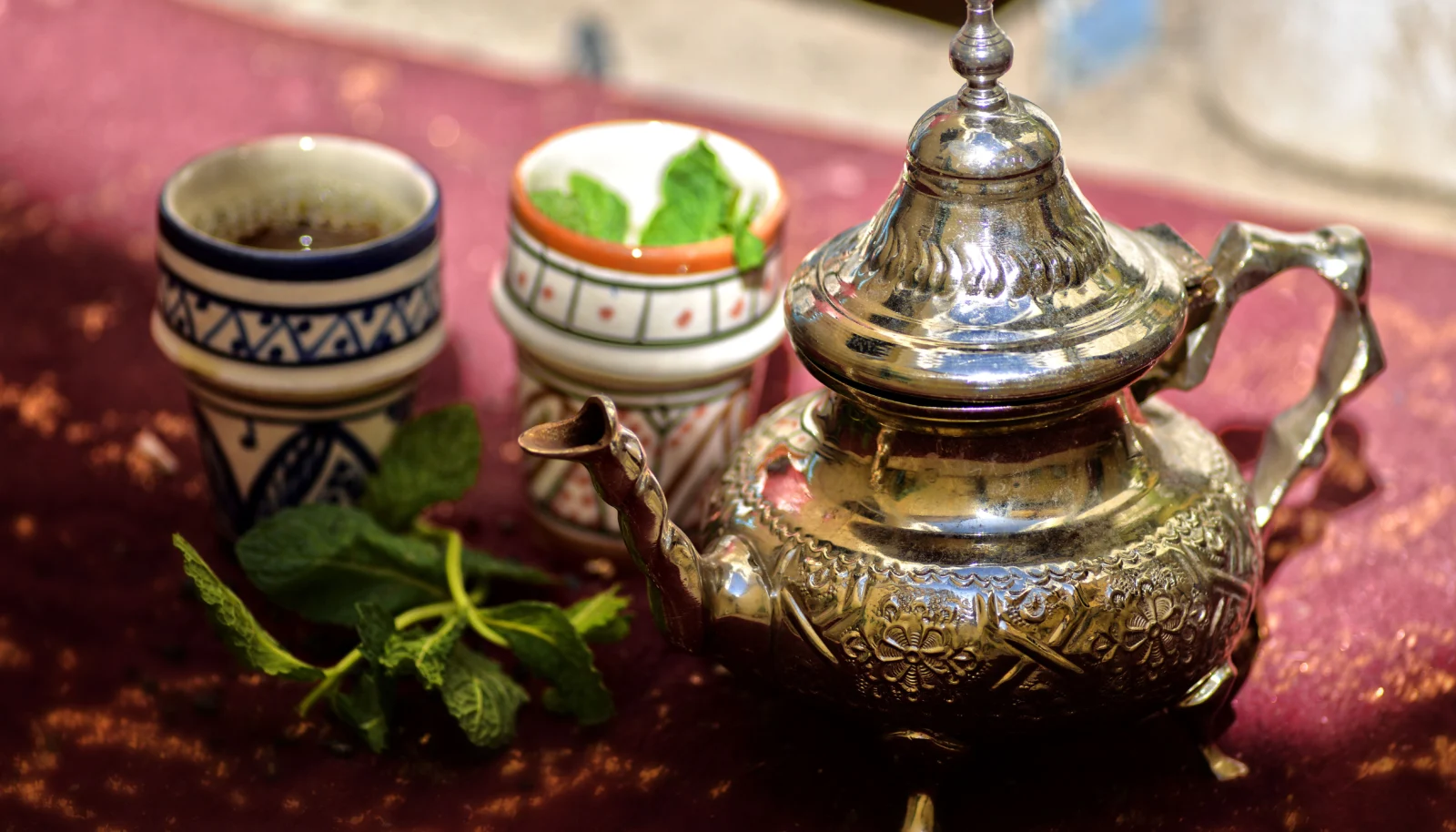
A classic Moroccan mint tea recipe uses Chinese gunpowder green tea, fresh mint and sugar. The tea is rinsed once to remove bitterness, steeped in boiling water with mint and sugar, tasted, and poured from a height into small glasses so that it forms foam. It is usually served three times, to guests, as a sign of hospitality.
Table of contents
When did tea reach Morocco?
Two accounts exist. Moroccan Corridor says tea arrived in 1854 during the Crimean War, when a British blockade of the Baltic ports led merchants to bring Chinese gunpowder tea to Tangier and Essaouira, where Moroccans added local nana mint. G Adventures gives the same broad story of a British merchant in the mid nineteenth century.
An Arabic Post article cites the book From Tea to Atay by Abd al Ahad al Sabti and Abd al Rahman al Khassasi, which places the first contact in the early eighteenth century, under Sultan Ismail. It says tea was at first rare, used as medicine, and limited to the sultan’s court, and that by the early twentieth century it had become the first drink of Moroccans. So there are two accounts: the popular story places the arrival of tea in the mid nineteenth century, while the Arabic source describes earlier court use.
What goes in
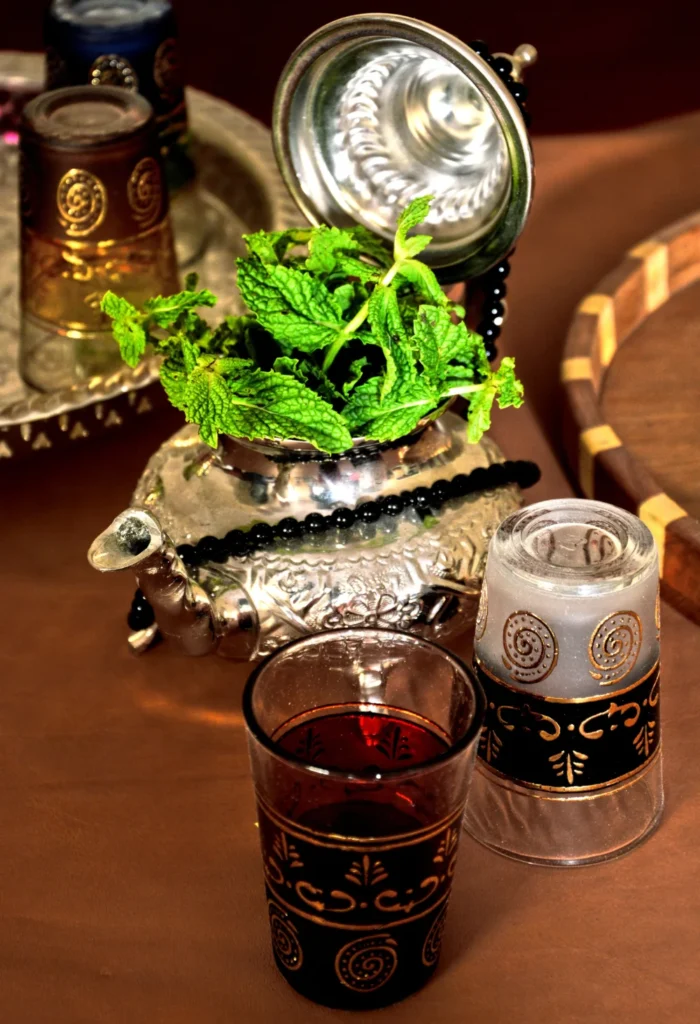
The common base is Chinese gunpowder green tea, fresh nana mint, sugar and boiling water. Moroccan Corridor mentions a sugar loaf. G Adventures says regional versions may add lemon verbena, thyme, sage, lemongrass, wormwood or dried flowers. The Arabic Post article lists mint in summer, lemon verbena or mugwort in winter, orange blossom in spring, and thyme and anise when someone is ill. Treat the seasonal list as one source’s description.
Moroccan mint tea recipe: how it is made
- Rinse the tea leaves briefly with hot water and pour that water away to remove bitterness (Moroccan Corridor; Arabic Post).
- Add fresh mint and sugar, then fill the pot with boiling water and let it infuse.
- Pour a few glasses back into the pot to mix it. The Arabic Post article says three to four.
- Taste and adjust the sweetness.
- Pour from a height into small glasses. This makes foam. Moroccan Corridor calls it the “turban”; the Arabic Post article says the foam covers about a quarter of the glass.
Amounts of tea, mint and sugar vary from family to family, so adjust them to your taste.
The three glasses
Moroccan Corridor says the same leaves give three servings: the first strongest and most bitter, the second sweeter, the third the lightest. It quotes a proverb that calls them “bitter as life”, “sweet as love” and “soothing as death”. G Adventures says tea is generally served three times and that refusing a glass can be impolite, especially in private homes or shops.
Who prepares it
Moroccan Corridor says the head of the household or the eldest son traditionally makes the tea. The Arabic Post article names the preparer as the household head. It is not the rule in every family.
Hospitality and social meaning
G Adventures calls mint tea the social equivalent of alcohol in a country where few people drink it, and mentions the nickname Berber whisky. Use the nickname with care and credit the source.
Frequently asked questions
Why is the tea poured from a height?
To cool it a little and to make foam, which signals that it is well made (Moroccan Corridor).
Is Moroccan tea sweet?
Sugar is a standard ingredient. Amounts are not given in the sources.
What goes with it?
Msemen (see Msemen with Amlou and Honey), chebakia (see Chebakia with Saffron and Honey), dates and amlou with bread (see Amlou: The Moroccan Argan, Almond and Honey Spread).
Sources
- Moroccan Corridor (moroccancorridor.com)
- G Adventures (gadventures.com)
- Arabic Post article (arabicpost.net)