Short answer
Saffron grades come from laboratory measurements of colouring strength, bitter taste and aroma, described in the ISO 3632 standard. Trade names such as “negin”, “coupe” or “super” are not legal grades and mean different things in different countries. A batch number, a harvest year and a test report tell you more than a letter on the jar.
Table of contents
- Where grades come from
- Trade names you will meet
- Whole threads, cut threads and powder
- How to read a label
- Does a higher grade always mean better for cooking?
- A short buying checklist
- How the laboratory measures colour, taste and aroma
- Three imaginary labels to practise on
- Cost per dish, not cost per gram
- Frequently asked questions
Walk through a spice market and you will see saffron sold as “premium”, “super”, “category one”, “Grade A” and half a dozen other names. Some of them mean something. Many do not. This guide explains the system behind saffron grades and shows how to read a label without being misled.
Where grades come from
Saffron quality is measured by a laboratory test standardised in ISO 3632. The test looks at three compounds. Crocin gives saffron its colouring strength. Picrocrocin is linked to the bitter taste. Safranal is linked to the aroma. The higher the readings, the stronger the saffron, and the standard uses them to place a sample into a category.
A grade on a jar is only reliable when it comes from an actual test on that lot, and the seller can show the report. Without a report, a grade is a claim.
Trade names you will meet
Different countries use their own words, and they are not interchangeable.
| Term | Where you may | What it usually suggests |
|---|
| See it |
|---|
| Negin, sargol, Iranian trade Describe how much of the stigma is red and how much is pale pushal style. Sargol is usually the red tips only |
| Coupe, mancha, Spanish trade Describe cut or whole threads and the amount of yellow style rio |
| Category I, II, III Laboratory reports Result of an ISO 3632 test |
| Premium, super, Anywhere Marketing words with no single meaning select |
For Moroccan saffron, labelling practice varies from one cooperative to another. Ask what a term means for that seller and do not assume it matches the Iranian or Spanish version.
Whole threads, cut threads and powder
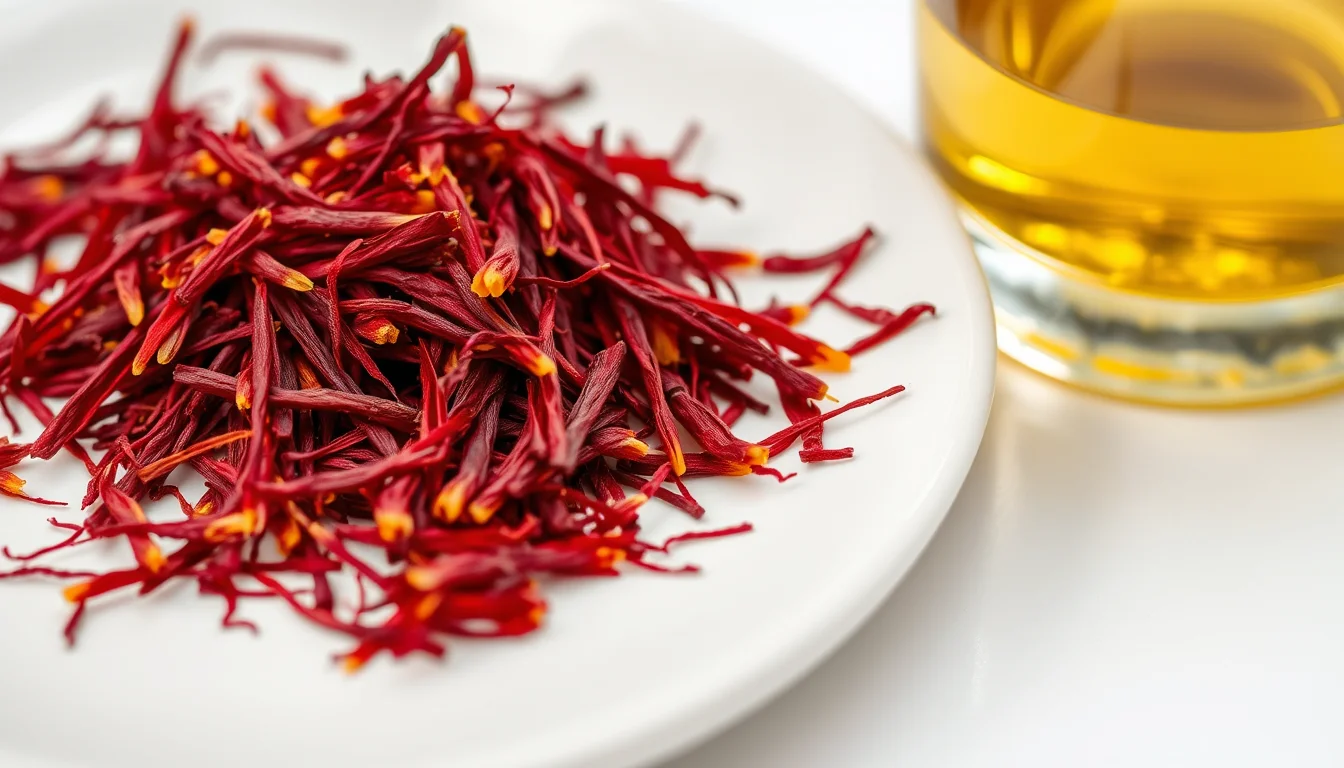
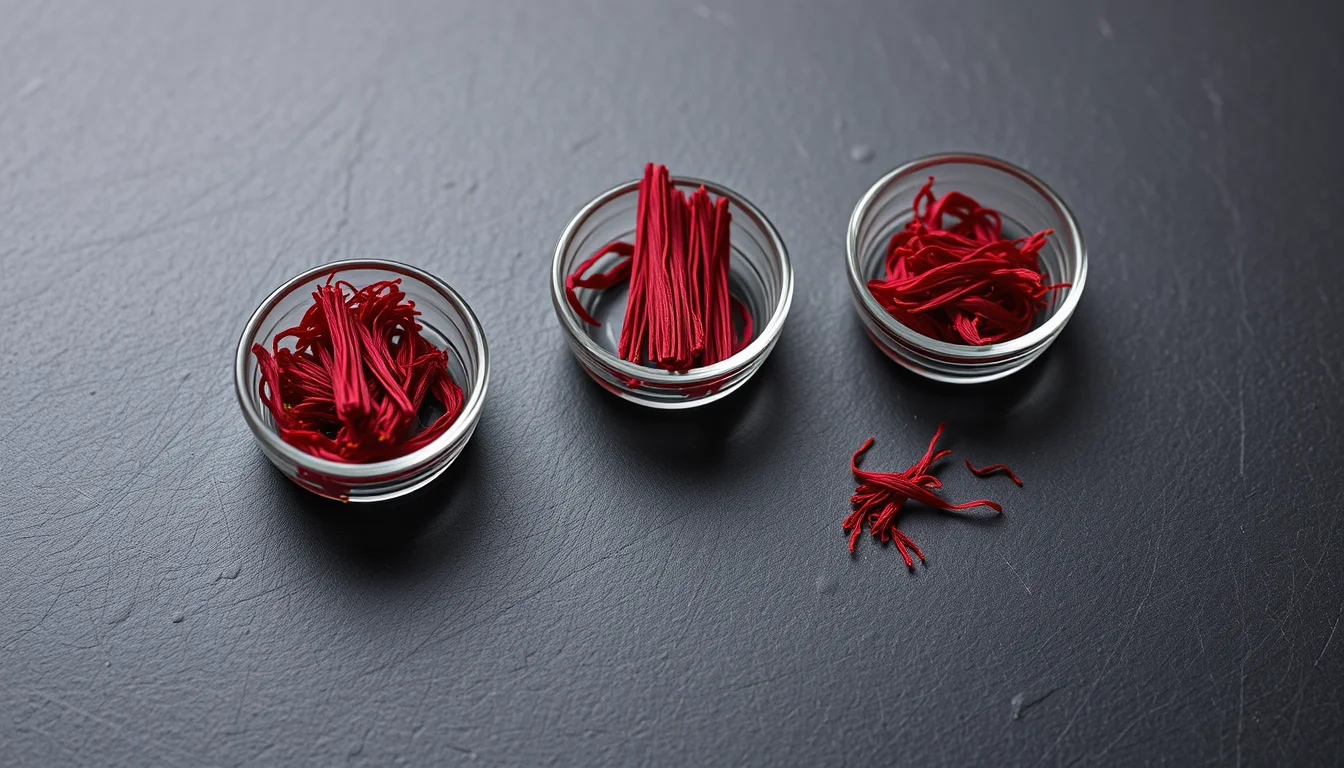
Whole red threads let you judge colour, shape and aroma yourself, so they are the easiest form to inspect. Cut threads are fine for cooking, though you see less. Powder is convenient but is the form where adulteration is hardest to spot, because the evidence has been ground away.
Yellow or white pieces are the pale style of the flower. A small amount is normal. A large amount means you are paying saffron prices for something that adds little colour or flavour.
How to read a label
A useful label shows most of these details:
- The product name, spelled the same way on the front and back.
- The origin, ideally a village, region or cooperative.
- The harvest year, since saffron fades with time.
- A batch or lot number.
- The net weight in grams.
- The form: whole threads, cut threads or powder.
- Any test result, with the date and the name of the laboratory.
A label with none of these gives you very little to hold on to, however handsome the jar.
Does a higher grade always mean better for cooking?
Not always. A high grade means strong colour, taste and aroma per gram, so you need less of it. For a dish that cooks for a long time, a mid grade can perform well. For a recipe where saffron is the main flavour, such as a milk pudding, a stronger saffron shows. Buy the grade that fits how you cook and the amount you will use in a year.
A short buying checklist
- Prefer whole threads.
- Ask for the harvest year and the producer.
- Smell the saffron before you pay.
- Ask whether the lot has a test report.
- Start with a small quantity and compare two sellers.
How the laboratory measures colour, taste and aroma
In a laboratory, a technician dissolves a sample of saffron in water and measures how much light the solution absorbs at particular wavelengths. Different compounds absorb light at different points, so the readings act as a fingerprint for colouring strength, bitterness and aroma. The technician also checks other features, such as moisture, foreign matter and added colouring. The result is a report that shows numbers, and the numbers place the saffron in a category.
For you as a buyer, this means three things. A category on a label should come from a report. The report should belong to the lot you are buying. And a report from a few years ago says little about saffron that has been stored badly since.
Three imaginary labels to practise on
These labels are made up for practice. They do not describe any real product.
| Label | What it says | How i would read it |
|---|---|---|
| A | “Premium Grade A saffron, 100% pure” | Marketing words only. No origin, no year, no batch. I would ask more questions |
| B | “Whole threads, Taliouine, harvest 2025, lot 14, tested category I, report on request” | Much more useful. I would ask to see the report and check the date |
| C | “Saffron powder, product of Morocco” | Powder with no other details. I would prefer whole threads |
The exercise shows how a label can look impressive and tell you nothing, or look plain and tell you everything.
Cost per dish, not cost per gram
A stronger saffron costs more per gram and you use less of it. To compare two jars, work out the cost for one dish. Divide the price by the number of grams to get the price per gram. Multiply that by the grams you use in a typical dish, and compare the results. The cheaper jar is not always the cheaper choice, and the more expensive jar is not always better. The test is the colour and aroma it gives you in the pot.
Frequently asked questions
Is category one always the best?
It shows the highest test results in the standard, but it says nothing about freshness or storage. A category one saffron from ten years ago is not what it was.
Can I test grade at home?
No. Colour, smell and the cold water test are clues. Only a laboratory can measure crocin, picrocrocin and safranal.
Why do prices differ so much?
Origin, harvest year, grade, packaging and the seller’s margin all play a part. A very low price for fine looking threads should still make you cautious.